
As Canada Day (July 1) and Independence Day (July 4) approach, we asked a few Canadian and US citizens to briefly share a patriotic memory, time or, experience when they felt proud of and pleased with their country. Today is the first of two installments.

The United States and the World’s Game
Gretchen Schoon-Tanis
We were back in the United States visiting family when the doctor asked me a question that became standard for people to ask over the years: “So what’s the difference between the US and Germany?”
The conversation meandered to a discussion of things I appreciated about both places, what I found hard, and what I liked about coming back. It was an interesting time to be an American living abroad (we moved just before Trump’s first term), and I was feeling particularly sensitive about the global reputation of the United States. I don’t know what got me on the soapbox when I was talking to my doctor, but I started talking about a particular favorite subject of mine – football. Or rather, to Americans, soccer.
Our family spends a lot of time and emotional energy on our football clubs. Among major professional clubs, our hearts belong to the Arsenal football club of London. But, in moving abroad, we supported our local club, Hannover 96. We joked while living in Hannover that our club excelled in mediocrity. They languished in the second division, typically in fifth or sixth place, just out of reach of promotion year in and year out.
We also follow national teams, and here is where my patriotic heart soars.

This might be slight hyperbole, but the US Men’s National Team excels at diversity, and that makes me proud to be American. I am thrilled to see my national team in the World Cup this summer full of people of all types of ethnicities, skin colors, and backgrounds. This also applies to our women’s team—our teams are diverse teams! Other national teams are more homogeneous. My husband will argue that other national teams are growing in diversity, but I maintain the US leads the way. Gio Reyna, Christian Pulisic, Tim Weah, Weston McKennie, and more players with diverse backgrounds have all represented the US during this World Cup.
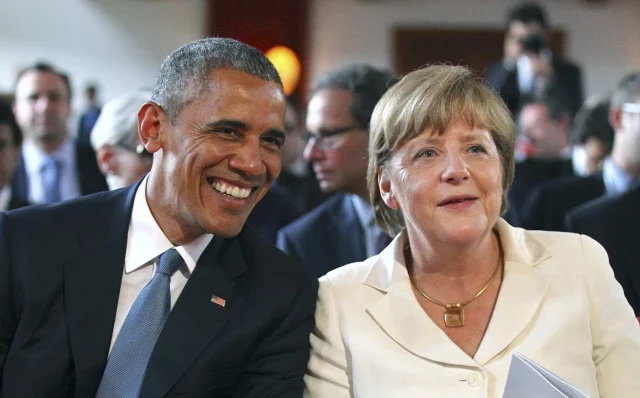
There was a rumor floating around the international community when we were living in Germany that Angela Merkel was influenced by the American idea of a melting pot and had in-depth conversations with Barack Obama about the concept. We all know there are incredible gaps between this ideal and reality in the US, and I have no idea if they ever actually talked about this, but the concept did have some influence on Germany immigration policies in the mid-2010s. This is now reflected in their national team, with quite a few players from Turkish or Middle Eastern backgrounds, along with several Black players.
I am writing before the World Cup, knowing I will cheer on the Red, White, and Blue. I hope they make it as far as possible (although I fear they excel at mediocrity like Hannover 96). I will cheer on my national team because they represent so much more than sport – they represent what is possible for any country that chooses to take on the ideal of diversity.
During the World Cup, you will hear me chant, “U-S-A! U-S-A! U-S-A!” while my heart swells with patriotic pride.
Gretchen Schoon-Tanis is a pastor at Hope Church in Holland, Michigan.
*******
The Land They Keep
Clara Pahl
My grandparents preserved a piece of American culture through the simple and demanding act of caring for their land.
Their hard work and devotion represent an understated, often overlooked or even misunderstood form of patriotism. They make me proud of the United States. I realize when fighter jets roar over stadiums, the crowd is supposed to fill with national pride. That doesn’t do it for me. Instead, my heart swells when I think of my grandparents and their farm.
They exemplify values that feel deeply American: endurance, cooperation, commitment, hope, and peace. It has been an honor to witness even just a part of their 63-year marriage
The farm, and the labor they’ve invested in it, is beautiful. Yet it can also be brutal. There are scattered rusty nails that poke through rubber boots. There are diseased stray cats who are routinely run over by cars on the gravel road. There are financial hardships amid droughts and floods. Coyotes carry off precious chickens and horse buggies crash. There have been gruesome accidents involving tractors and chains. Yet my grandparents have overcome these accidents and adversities, even now in their old age. I am proud.

To this day, they playfully argue over who makes the morning coffee. It has always been a game of “I want to serve you first!” When I was little, the game would send me into a fit of giggles.
When I see similar acts of quiet, playful responsibility among other Americans, when people relieve the burdens of others, I feel pride in my country. What if, instead of constantly fighting over who is right, we fought over who gets to serve the other first?
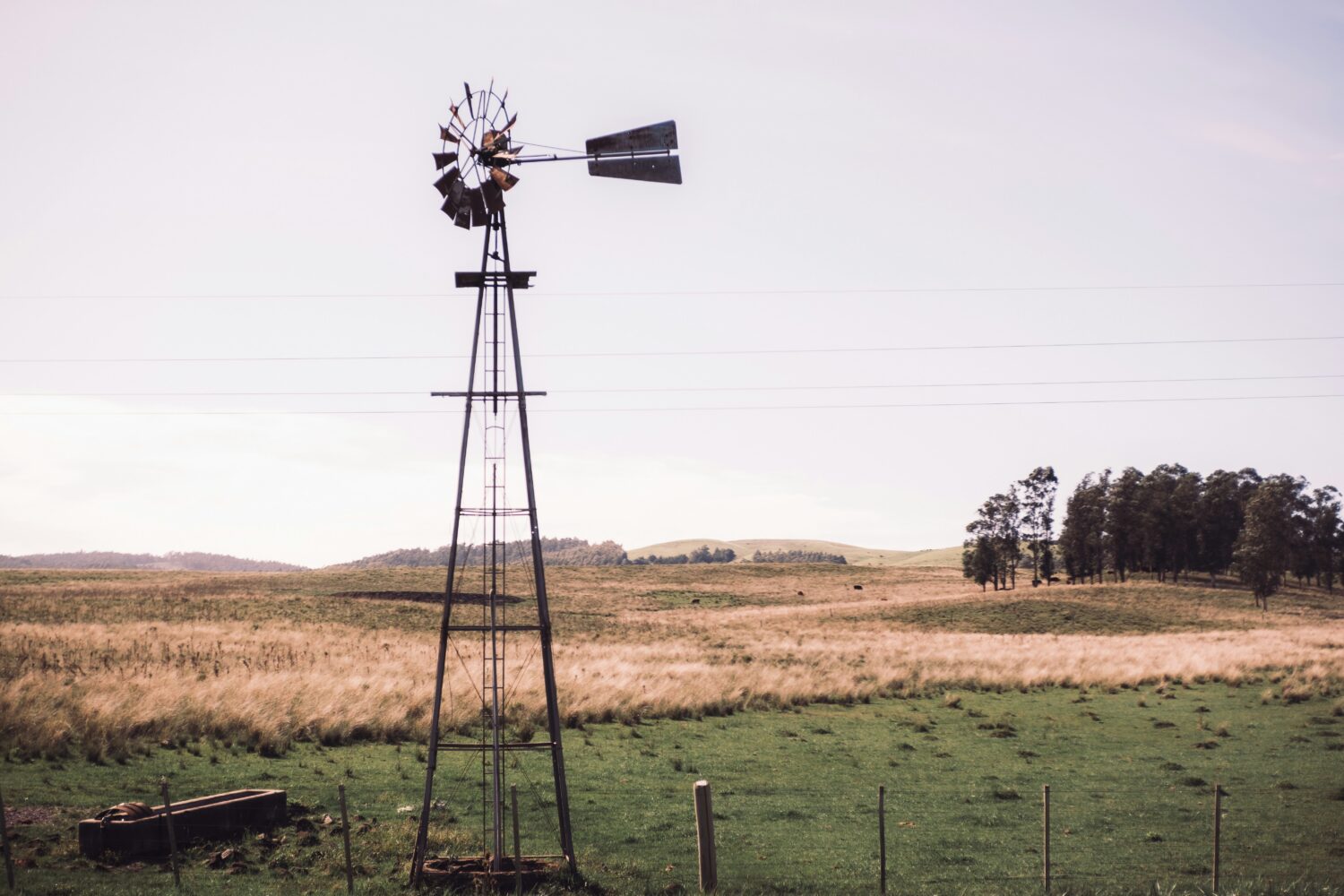
I once heard a pastor say, “The kingdom lies beyond us.” When I stand on my grandparents’ farmhouse porch, I understand what he meant. I sense something sacred in the blood, sweat, and tears they have poured into their farm, something sacred in the old windmill standing proud by the rows of pine trees, the sun breaking through heavy clouds, and horses twitching away flies with their ears and listening for the voices of the people who care for them.
My grandparents do morning chores between five and seven o’clock, and evening chores between five and ten, depending on the weather and other obligations. They continue this work despite being in their eighties. I am well aware their work ethic and resilience is not shared by everyone.
They keep going because they love this piece of the country that has been entrusted to them. They understand taking care of this land is both a privilege and responsibility. They know the farm’s tranquility does not appear magically. It takes work and sacrifice.
When I see the bull, horses, and sheep grazing together, and hear the cicadas chirping at night, I realize that I have experienced a peace that is very hard to replicate. It is a peace rooted in love and the land itself, a peace I will always carry, far beyond their American farm.
Clara Pahl is a substance-use prevention specialist for a non-profit in Ames, Iowa.
*******
Listening to the Stories of Survivors
Michael J. DeMoor
Like many Canadians, my honest answer to the question “When have you felt most patriotic?” is “When I’ve been in the States.” So, you better believe that when my sister-in-law took my wife and me to see The Tragically Hip playing an outdoor show in downtown Pittsburgh, the impact of my national self-satisfaction probably registered on the Richter Scale.
But that’s smugness, which isn’t the same as pride.
You can “justify” smugness by appeal to real shared accomplishments or excellence—our healthcare system, our relatively low gun-crime rates, our more-or-less functional parliamentary system—but that’s a post hoc rationalization of the pleasure of having a secret superiority over the benighted crowds that surround you.
A better way at the question might be: “When have I seen my country at its best?” That was in 2014, when I saw my country frankly confronting itself at its worst.
The national story I grew up with was that Canada exists because two peoples (French and English) decided to unite to form a new country dedicated to responsible government, mutual forbearance, and general inoffensiveness. Then they built a railroad to spread these things across a cold and forbidding wilderness.
Like most White Canadians, I had to learn gradually that this story was equally one of the dispossession, displacement, and attempted destruction of Indigenous Peoples, not as a single era in our history, but as a consistent policy of our “responsible” government from Confederation onward.
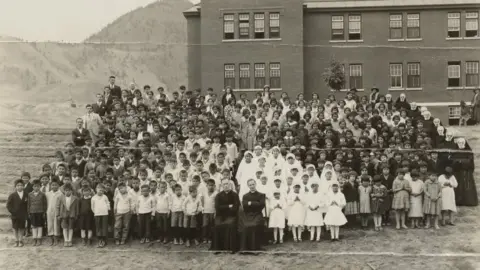
This policy included generations of children ripped from their homes and forced into Indian Residential Schools (set up by the Federal government but run primarily by Christian denominations), in a genocidal effort to “kill the Indian in the child.” The last of these schools didn’t close until the 1990s and subsequent generations of Indigenous people, families, and communities continue to suffer the inevitable long-term effects of the deliberate policy seeking their destruction.
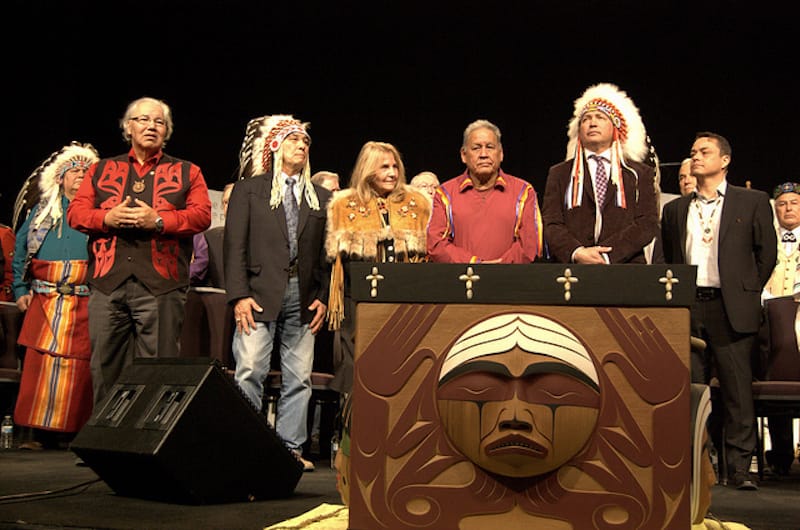
In 2014, almost the entire student body, faculty, and staff of The King’s University in Edmonton (where I work) piled onto buses to attend the hearings of the Truth and Reconciliation Commission of Canada. This commission had toured the country gathering personal stories, archival documents, and figures regarding residential schools.
The Edmonton event was the last stop before the commission would create its Reports and Calls to Action. The focus of these events was, for us from King’s, listening to the stories of survivors, and being present as they shared their experiences. Later, we reflected as a community on what being witnesses to these stories means for a Christian university founded by settlers but claiming to be welcoming to all.
It seemed during the life of the Commission that Canada as a whole was doing something similar: listening, acknowledging, reflecting, facing up to the realities of this country; not just its past but its ongoing practices and policies.
This was not an act of “generosity” or “magnanimity” by Canada: it had to be forced into the effort by a lawsuit. The TRC was part of the settlement agreement. What’s more, many of the responses to the Commission’s Calls to Action are stalled or have never really been attempted.
The Commission hearings and their aftermath didn’t close a chapter in our history, as some fondly imagined. But it did show me the country at its best, which is to say, in a moment where it was possible to reasonably hope that it could be honest with itself about itself; that a country could find common purpose (or “common objects of love” as St. Augustine puts it) without self-deceptive narratives of special greatness, virtue, or excellence. (Even if that special greatness is our inoffesiveness.)
I am proud to live in a country where that is a possibility. And maybe a bit smug about that, too. But that’s on me.
Michael J DeMoor is a professor of Social Philosophy at the King’s University in Edmonton, Alberta.
Farm windmill photo by Ivan Cheremisin on Unsplash

10 Responses
Thank you for these three stories. Each one tells a story about valuing the gifts that are giving to any country, if we’d just open our eyes and acknowledge them–nothing exceptional, nothing that makes us better than or the greatest. Just gratitude for what’s been given and an acknowledgement of how we too often fall short of deserving any of it. At a time when the idea of patriotism is being abused and exploited, these stories were refreshing, inspiring. Thank you!
One of the moments I felt very proud of Canada occurred on September 11, 2001. After the fall of the Trade Center buildings, the US closed all airspace, and Canada allowed 38 international flights carrying close to 7000 passengers to land at the Gander Airport in Newfoundland.
The small community of about 10,000 people in Gander welcomed the stranded passengers in their homes and schools and allowed them to stay there for a week, until US airspace opened up again. The event was later celebrated in the hit musical “Come From Away,” and can also be seen in the 2018 documentary “You Are Here: A Come From Away Story.”
Yes, Hugh, that extraordinary display of human kindness in Gander some 25 years ago moved me too.
Venezuela is one place today (and there are so many more) where human kindness is desperately needed. But let our eyes be open to the needs around us too, even when it may be just the loneliness of a neighbor.
Thank you very much for stories, which put me quietly in touch with my stories, too, of graces given and kindness extended to me across boundaries of nations and creeds.
What a wonderful framing idea for celebrating these 2 holidays. Saluting the Conversational Creativity of RJ editors! Looking forward to reading installment 2.
I thought this was very good.
While I very much appreciate the theme of these articles, I do have some objections to Clara Paul’s articles. First of all, while I haven’t taken the time to do a head count, but I’m not sure the US national soccer teams lead the way in diversity. I would suggest that the Canadian Men’s national team is equally diverse. That said, it also begs the question how we measure diversity in a country that is almost totally populated by people who are, at some point in history, immigrants.
Secondly, it seems somewhat incongruous to celebrate diversity and also laud the melting pot as an ideal. The whole idea of a melting pot is that diversity takes a back seat to homogeneity. The name makes that clear. If you want to celebrate diversity, a cultural mosaic is far more ideal. On that count, I suggest again that Canada can be seen as leading the way. No offense to Clara intended. Simply trying to bring clarification.
Hi Roy, thanks for reading. Just to clarify, Gretchen wrote about the US national soccer team, not me. I wrote about my grandparents’ farm. No offense taken!
Oops. Sorry Clara. For the record, as one who grew up on a farm, I loved your article. I wish I had known my grandparents.
Oops. Sorry Clara and Gretchen.