
Frederick Buechner would have turned 100 on July 11th. (Here’s a bit of surprising context: Marilyn Monroe, Queen Elizabeth II, and Fidel Castro were also born in 1926.) Buechner almost made it—he lived to the ripe old age of 96, dying on August 15, 2022. My own father died on August 13, 2022, and it was staggering to lose my father and the man I consider my literary and spiritual father within two days of each other.
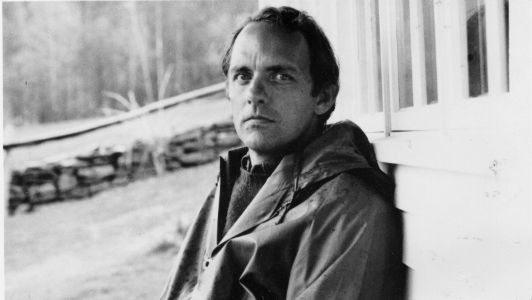
The occasion of Buechner’s centennial has got me thinking about him and some of the paradoxes of his writing career. To begin with, we don’t remember him the way he wanted to be remembered. He saw himself as a novelist and wished to be remembered as such. We think of him as a memoirist, on the strength of books which more or less invented the spiritual memoir genre: The Sacred Journey, Now and Then, Telling Secrets, and The Eyes of the Heart. We remember him as a preacher whose sermons were collected in The Magnificent Defeat, The Hungering Dark, and Secrets in the Dark. and who gave us the remarkable book about preaching, Telling the Truth: The Gospel as Tragedy, Comedy, and Fairy Tale. Even more than that, we remember him for the pithy reflections on faith and life in Wishful Thinking and Whistling in the Dark, which show up these days in a daily email sent to thousands and as posts on social media. These quips and quotes make Buechner a sort of modern theological Mark Twain or Benjamin Franklin.
Listening to Your Life, a collection of Buechner excerpts formatted for daily reading, is Buechner’s biggest selling book. The irony is Buechner didn’t sit down and write Listening to Your Life. An editor drew the material from across his books, and of the 366 readings in Listening to Your Life (yes, February 29 is included), less than 50 come from his novels and less than half of the novels are included. Listening to Your Life is a literary version of a greatest hits album, and most of Buechner’s fiction is overlooked.
Buechner would want us to pay more attention to the novels. (In no way am I trying to denigrate Listening to Your Life or Buechner as a memoirist, preacher, or popular theologian. I love all of it and maintain that it all is woven with the same thread. As one reviewer put it, “Touch any one thing in any one place and you are in touch with all of it.”)
I’d wager it’s been a while (if ever) since you’ve read one of Buechner’s novels. Might I suggest you mark his 100th birthday by reading a Buechner novel, perhaps for the first time?
Why not read Godric? It is Buechner’s masterpiece, a fictionalized life of a 12th-century saint. It’s a stunning book about forgiveness, rising from Buechner’s search at mid-life for his missing father.
Buechner practically invents a new language as he attempts to capture medieval speech. Since Godric was born in England about the same time as the Norman invasion, Godric contains only words with Anglo-Saxon roots. That’s the sort of linguistic dexterity that attracts notice, and Godric was runner-up for the Pulitzer Prize in fiction in 1981.
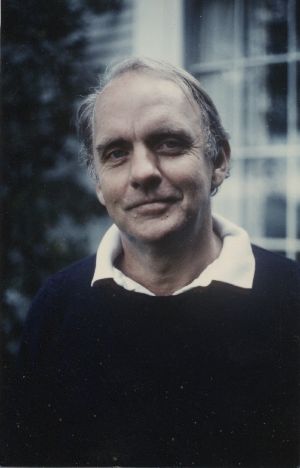
Or maybe take a walk on the wild side and read Lion Country, the first of four volumes that were eventually compiled as The Book of Bebb. Buechner said he found his voice writing about Leo Bebb, a larger-than-life itinerant evangelist and diploma mill operator. There’s enough sex and swearing in the Bebb books to guarantee everything written by Buechner would be banished from any bookstore with the words “Family” or “Christian” in their name. Many have wondered what an ordained minister was doing writing books like that. I’ve always thought the church would be a lot more interesting if more ministers wrote books like that. Forget whatever notions you have about what sort of stories pastors are supposed to write and enjoy Lion Country for what it is: a rollicking good time that plays around the edges of faith.
The fact that Christian bookstores ignore Buechner reveals yet another paradox of his career. His first job after seminary was as school minister at Phillips Exeter, and his students self-identified as “negos,” meaning they were negative about most everything, especially authority figures, from the government to the church to the school administration to the school minister. Buechner worked hard on crafting messages that would catch those students off guard and be heard. From that point on he imagined his audience as “negos,” those he called “Christianity’s cultured despisers” (borrowing a phrase from Friedrich Schleiermacher). He wrote for those outside the church or on its fringes. Therein lies the problem—it is Christian readers who buy his books, not Christianity’s cultured despisers. For some reason, his lack of traditional Christian language and platitudes make his nonfiction refreshing but doesn’t quite work the same magic on Christian readers of the novels.
I am on a one-man campaign to overturn that.
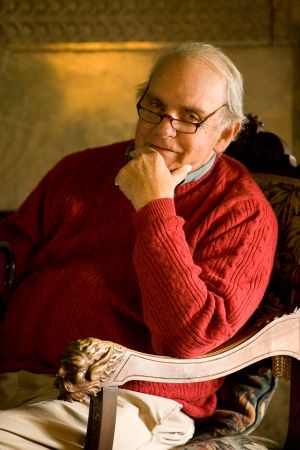
There are other books to read: I have not mentioned Brendan, another life of a saint that was the follow-up to Godric, or The Son of Laughter, a retelling of the story of Jacob, a book much more in line with notions of the sorts of books ministers are supposed to write. An overlooked gem is The Wizard’s Tide, a fictionalized retelling of Buechner’s stormy childhood. If you’ve read all those, find a copy of The Final Beast, the first of Buechner’s novels where grace has the final say, or dig up the hard-to-find The Return of Ansel Gibbs, a political thriller Buechner wrote while a student at Union Theological Seminary. All are worth your time and effort to find and read.
When asked by an interviewer how he wished to be remembered, Buechner said, “I would choose the fiction.” Yet few readers engage Buechner’s fiction today. Why not honor St. Freddy of Rupert’s 100th birthday by reading one of his novels?

9 Responses
You’ve hooked me. I’ll start by re-reading Godric, suggest that one of the others is on our book club reading list for 26-27, and read my way through the rest. Perfect way to honor a remarkable man.
Jan, you triggered a longing to be in a book group digging into Godric. Is anyone else in the local RJ world interested?
Thank you Jeff, for keeping Frederick Buechner and his work alive. I join you on your crusade! He spoke to me deeply as one of those “on the fringes”. Wes and I read his beautiful and powerful Godric years ago. After our marriage, each morning started with Listening to Your Life among a couple others, followed by hours of pondering how it touched our souls—sacred ground. I’ve read almost all of his books (including your Reading Buechner). His honesty and vulnerability reveal Truth in a way I can hear it.
It’s been a while since I read Godric, but if I remember correctly, aren’t many pages of the novel written in iambic meter?
Hugh,
The whole book is written in an iambic beat, which most readers don’t even notice. I don’t know another novel for which that’s true. I taught Godric for years and still marvel at the rhythm, the countless metaphors on every page, and all the quotable truths Buechner packs in. Besides that, it’s the most powerful story of grace I know. It was a joy to teach.
Thanks, Jeff for keeping his work alive.
Thank you, Jeff, for having a life’s work that matters.🙏❤️⚾️
Jeff, I credit you with introducing me to Buechner when you taught that reading / writing for pastoral life class at WTS. Thanks for keeping up the good fight! I’m going to add the Bebb stories to my to-read pile, since I haven’t found my way to those yet…