
I cut my political teeth in the early 1980s, when the abortion debate bore little resemblance to what it has become today. At that time, Democrats still had political space to be prolife as part of a broader commitment to protecting the vulnerable, while a contingent of Republicans also held nuanced views, recognizing the economic and social forces that shape abortion decisions. There were prolife Democrats, and I had the privilege of working for one in the Michigan Senate—the late Stephen Monsma.
Our understanding was rooted in Catholic Social Teaching and what Cardinal Joseph Bernardin called a Consistent Ethic of Life: the belief that all human life is sacred and worthy of protection, from womb to tomb. To be prolife was not merely to oppose abortion, it was to ensure that mothers, children, and families could live free from poverty; that the marginalized were protected; that the death penalty would be abolished; and that weapons of mass destruction would be defunded and dismantled. It was a comprehensive moral vision.
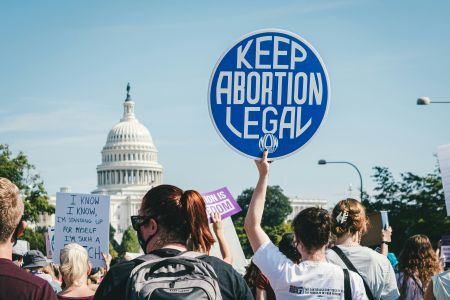
This stood in stark contrast to the broader prolife movement, which increasingly narrowed its focus to a single objective: banning abortion. While conservative activists derided prolife progressives as “liberals in sheep’s clothing,” we held to a hopeful assumption—that common ground could be found with organizations like Right to Life to reduce the incidence of abortion itself.
We were mistaken.
The divide between these approaches proved to be more than strategic; it was philosophical. Progressive prolifers sought to reduce abortion by addressing its root causes—poverty, lack of healthcare, economic insecurity. The more powerful conservative prolifers, by contrast, pursued legal prohibition alone. They presented Pregnancy Resource Centers as evidence of compassionate solution, but these were a thin veneer—small in scale and insufficient to confront the deeper forces driving abortion.
To advance a more holistic vision, I was one of the founders of JustLife, a political action organization dedicated to supporting “consistently prolife” candidates. Our board included respected thinkers and leaders such as Stephen Monsma, Ron Sider, and Tony Campolo, and was guided by voices like Phillip Berrigan, Father Ted Hesburgh, Stanley Hauerwas, John Perkins, Richard Rohr, Jim Wallis, and the National Conference of Catholic Bishops. Between 1988 and the early 1990s, we endorsed a bipartisan slate of 30+ congressional candidates in each election that included leaders like Rep. Paul Henry (R) MI.
Our approach was grounded in evidence as well as ethics. Legal scholar Mary Ann Glendon documented that developed nations which invest in childcare, maternal health, and economic security see lower abortion rates. By contrast, countries that rely solely on legal bans often experience higher rates. The lesson was clear: if the goal is to reduce abortion, one must address the conditions that give rise to it.
Yet even as this evidence mounted, the dominant prolife movement hardened its stance. Rather than pursuing policies that could reduce abortions in the present, it fixated on a legal endgame that, at the time, seemed politically and judicially unattainable.
One debate revealed this disconnect with painful clarity. In 1990, Congress considered the Family and Medical Leave Act (FMLA), a policy designed to protect parents from losing their jobs after the birth of a child. By any reasonable standard, this was pro-family, pro-mother, and pro-child legislation—precisely the kind of policy that could reduce the pressure to seek an abortion.
Yet Right to Life and every other major prolife organization opposed it, arguing that it imposed undue burdens on business.
JustLife took a different path. We joined forces with organizations on the other side of the abortion divide— the National Organization for Women and the National Abortion Rights Action League—to support FMLA as a meaningful way to reduce abortions. Some prolife legislators, including Senator Orrin Hatch and Representative Henry Hyde, recognized this and voted accordingly. But they were exceptions.
The antiabortion movement (by this time it forfeited the right to claim to be “pro” anything) became defined by political expediency. In the 1990s, it embraced a strategy of demonization—casting abortion proponents, and often women themselves, as enemies. This rhetoric fueled outrage, energized a political base, raised tons of money, deepened the cultural divide, and cemented the status of its leaders has major players in the halls of right wing Christian circles of power.
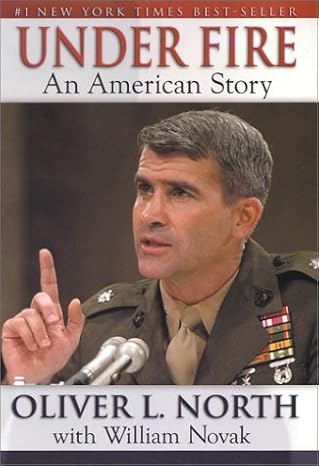
Another episode illuminated that this transformation was not only rhetorical but moral. Michigan Right to Life invited Oliver North to keynote a fundraising dinner. North was the architect of the illegal effort to supply arms to the Nicaraguan Contras. Their terrorist actions led to the destruction of health clinics that cared for pregnant mothers and unborn children, including clinics sponsored by my own Christian Reformed denomination. The contradiction was impossible to ignore. A movement claiming to defend life was elevating a figure associated with its destruction. My loud and public objections to disinvite North were dismissed.
By the mid-1990s, the Republican Party’s “big tent” had collapsed into a narrower ideological project, with a ban abortion strategy as a central wedge issue that abandoned any serious pursuit of bipartisan solutions. What could have been a broad, consensus-driven effort to reduce abortion instead became a tool of the culture wars and a descent into moral compromise.
Many anti-abortion leaders aligned themselves with policies that stood in contradiction with a belief in the sanctity of life—support for capital punishment, deep cuts to health and food programs serving the poor, and use of torture in the War on Terror. The consistency that JustLife championed gave way to contradiction in the antiabortion movement writ large.
At some point, the dissonance became too great to ignore, and I realized that I had indeed missed the mark.
I recognized the underlying assumptions of the movement—the ways in which it often discounted the lived realities of women, its disregard for women’s moral agency, and their right to make decisions about their own wellbeing.
So I changed my mind. Not lightly, and not quickly—but decisively.
The tragedy, as I now see it, is that a movement that claimed to stand for life became entangled in power. In choosing political power over moral consistency, it forfeited opportunities to save lives in the here and now. In refusing common ground, it became complicit in the very outcomes it claimed to oppose.
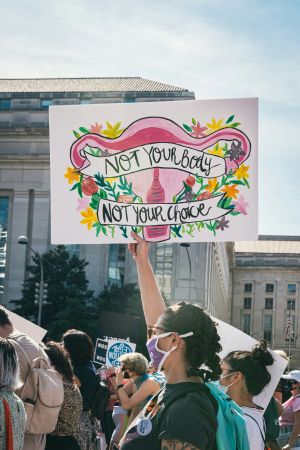
In the first full year after the Supreme Court overturned Roe v. Wade, an estimated 1,037,000 abortions took place in the United States — the highest number measured in over a decade. The most recent data show abortion volume continuing to climb. The action promised to reduce abortions has not reduced abortions.
Here is the prophetic truth that must be spoken: A cause that abandons compassion for punishment and control while demonizing others will lose its soul. A movement that seeks purity over people will bear bitter fruit. And a faith that proclaims life, yet neglects the living, will find itself hollow before the judgment of history.
If we are to move forward—truly forward—we must recover a deeper vision. One that honors life not only in principle, but in practice. One that meets women not with coercion, but with support. One that confronts injustice not selectively, but wholly.
Only then can we claim, with integrity, to be truly prolife.

16 Responses
Comment
Thank you for the read. I am curious as to what this change exactly means for Dave. I believe there is room for Christian’s to advocate for womb to tomb policies. He is correct in stating that this stance does not hold much political power. It just feels unpopular. However, a Christians first response must be to promote justice while not sacrificing their moral convictions. Dropping your values just because you are not winning politically is a reflection of an earthly mindset. Christians should not simply give up on womb to tomb policies because they view them as unattainable! Pursue justice always! Even if that means little by little.
Thank you!!
Pro birth is not Pro life. Many believers do not understand the difference. We continue to cut social programs, education programs and make life difficult for the single mother.
And yes, we Judge these women without walking in their shoes. We piously point out adoption, or foster programs. And our foster programs are fraught with problems.
We cannot be Pro life and support capital punishment, and social injustices. We should be rising up in arms about states that allow marriage for young women at a young age. This is not in the best interest of any young girl, even if she is pregnant.
We need to walk with people, support them and SHOW them the love of Jesus.
Thank you for this honest and thought provoking article.
Powerful and persuasive — many thanks. And may I add: when you hear politicians warn of the moral abyss that would engulf us if abortion were an option in all states, and if all public schools taught sex ed, and if teenagers could easily access contraceptives, consider the Netherlands, where all of these are the case. A medical journal reports that out of every 1000 young Dutch women aged 15-19, 9.5 terminated a pregnancy in a recent year. For young women in the US the number was 92.7. Which country is more “pro-life”?
Thank you for sharing your journey in this complicated issue involving people (voices) within the programs to help.
I sometimes wonder how often we are giving voice for the unborn child. How can we know how they would vote? Did God know that child before he was in his mother’s womb? I have no perfect answers just wrestlings.
I disagree with attaching the word “pious” to adoption and fostering a child—if done with love. I personally have a grandchild who was adopted out and is now back in my life. And who has given me a great and now great-greats (good word). Not always an easy road but life is like that and worthy of it. Choose well.
“The tragedy, as I now see it, is that a movement that claimed to stand for life became entangled in power. In choosing political power over moral consistency, it forfeited opportunities to save lives in the here and now.”
This statement is true for many movements/actions where power and control become the end goal.
Thank you for this history lesson that we need to learn from as we address issues today.
Your well written essay in essence traces my own journey of grappling with my Christian faith and social justice goals. I was privileged to know the late Dr. Stephen Monsma — first as a colleague and then a friend. I have read several of his books over the years. Thank you for sharing your thoughtful journey regarding your efforts to apply your Christian faith for social justice in the socio-political arena.
I would still call myself a pro-lifer even though the “official” pro-life movement has sadly lost its way in the search for power. I still believe the consistent pro-life approach is best, such as your JustLife group advocated. Sadly, there are hardly any pro-life Democrats left. I don’t, however, think there’s a need to disparage crisis pregnancy centers in making your case here. Maybe some of the power-hungry polarizing pro-lifers just use them to ease their conscience, but even if the centers are small in scale and insufficient for the need, they are better than nothing. I’m sure one can find cases of workers in them who lack compassion, but I’m guessing that’s not common. And for many women who have used their services, they have been a God-blessed lifeline.
CPC’s individually are fine for the limited impact they offer; same said for their volunteers. But they’ve been touted as the solution for ending the demand for abortion. The scope and scale of the solution FAR outstrips CPCs’ capacity. In that way they are window dressing, and a cynical one at that as touted by national ‘prolife’ leaders..
Ethics realities. https://www.liveaction.org/news/new-mexico-highest-abortion-rate-states-2025. In the fine print, future data will no longer be published. 90 yrs of rule by one dominant party in a predominantly Catholic state. Less live births reported. State not growing, but by far the best year round weather (no humidity) of states where we have lived: Montana, Washington, Colorado, Iowa, Michigan.
You completely missed the point of the article and ironically posted a link showing exactly why the author does not claim the pro life label anymore. This article completely glosses over the reason New Mexico has a high abortion rate which is because it is adjacent to state which doesn’t allow abortion even if the mother’s life is in danger. New Mexico is adjacent to Texas which banned abortion in 2022 and has 15x the population. (2 million vs 30 million). You could give them credit for the reference that 2/3 of the abortion were from out of state, but I suspect they are mostly angry that some women have options still. I don’t follow New Mexico politics, but the lack of reporting is likely to protect women who travel from extreme republican states that want to punish them.
I would think there is a difference between the political and the religious/theological approach.
The political difficulty with “whole life” or consistent life approach was that it always seemed like a form of bait and switch, a difficulty of most third way politics. As a form of politics it was and is unstable; in most locales it lacked sufficient scale. In West Michigan, and in a few other areas, it did work, as David notes: Steve Monsma and Paul Henry, and there were others too. (I should note that I was there, too, with David, active in these and other campaigns).
From a religious/theological approach the consistent life ethic was a creature of the Boomer evangelicalism. In this polarized era we can forget how broad the Evangelical stream was in the late 20C where social justice concerns and individual piety not only walked together but reinforced one another. Here the work of Just Life and of David made a positive contribution, a way of thinking that deepened individual commitment. I consider the work of that time to be a gift which still carries theological and spiritual weight. The practice of compassion and mercy, the practical concern for the weak are not simply political projects, but fundamentally about how one approaches the world. The consistent life ethos was and is about the messiness of our own decisions, and so always about the possibility of Grace.
Many thanks for this essay. The issues you raise should be addressed with open minds and open hearts, rather than elements of a political agenda. Your three-word phrase “entangled in power’ certainly applies to the right wing evangelicals who are pushing political agendas that are at odds with biblical teaching. But political power seems to entangle many of those on the other side as well. When will we learn that Jesus clearly teaches that this is not the way of the Kingdom of God?
I was sent this article by an organization in the Consistent Life Ethic Network. JustLife was one of 205 member groups of this still existing Network. Much of what is stated by the author is true…but is qualified.
The pro-life movement’s increasingly narrowed its focus on abortion in the same critical way that the pro-peace movement needed to narrow its focus with the increase in nuclear weapons. And yes, it demands the law to reduce them. That demands politics and voting for mostly Democratic candidates who will reduce the military budget. That makes the peace movement ‘political’, does it not? I believe that is entirely appropriate and that the pro-life movement focuses on the law is also entirely appropriate. Both issues concern genocide and have a moral obligation to prioritize the very right to live over the quality of life. Sure, we still work for international peace in countries and work for childcare for families.
I am a Democrat and our defeatist strategies are legend, i.e., pro-choice/anti-woman Platner is (was) political, not moral. Kamala’s $ 670,000 abortion-rights ads were hardly moral either. I hope our Republican friends don’t hold that over our heads. And If I were you, I would forgive them for the Oliver North debacle.
Thanks Dave,
One of the most polarizing and misused issues of our time! Why? I suspect because It is so valuable as a political platform weapon. Like you I am pro-life but not Right-to-Life. There are two reasons: R to L became so obsessed with the unborn, it seemed unconcerned with the already-born. The second reason is the tone of the movement. Protest is fine, necessary even, but when the tone becomes angry, moralistic, and end-justifies-the-means-tolerant, I believe Jesus would check out. This applies to war protestors, choice advocates, “patriots,” and LGBT – haters or lovers. Mob mentality corrupts shalom.
But one more thing bothers me and that is the denial of nuance. The primary question for me is when exactly does human life begin or cease to matter. Neither side condones murder, I hope. Some claim life at the moment of conception. On the other extreme, others claim the moment of actual birth. I find myself suspecting, but not insisting, somewhere in between. I just cannot reconcile believing that the morning-after is the same as twenty-some weeks. Really! The use of an IUD is criminal? Thousands of sperm/ egg combos self-abort. What happens to those “souls”? Yes, we were “knitted in our mothers’ wombs,” but two overlapping pieces of yarn do not a sweater make. There is room for a civil debate and a policy compromise. The witch- hunting of rape victims, mothers with life -threatening conditions, and/ or responsible medical providers is not the high moral ground.
In summary, I am not pleased with the way we have managed the abortion issue. Shame on us.
Thanks again for exploring a critical issue. You framed it well.
Between 67 and 80% of fetuses diagnosed with Down syndrome in the US are aborted. The rate is equally high for fetuses diagnosed with Turner syndrome at 76%.
Non-Hispanic Black women obtain 39% of the abortions in the US while they make up only 13.5% of the population.
The rate of abortion for women living under the poverty line is 52/1000, while the rate for women at 200% or above the poverty line is 9/1000.
In 2005 the Guttmacher Institute asked 1,209 nine women who obtained an abortion what their primary reason for doing so was. 73% answered that they could not afford a baby at that time.
I fully agree with Dave’s analysis that anti-abortion forces have focused almost exclusively on making abortion illegal with little regard for the women making very difficult choices.. I wonder if the pro-choice forces have done any better in offering a poor woman the real choice she might make regarding her unborn.
Could one make the case that abortion has become a form of euthanasia for the unwanted in this country? Pause and think before you answer that question.
This is a bit difficult to dissect, but my takeaway was that you are no longer opposed to abortion. I hope I am not reading between the lines too much, but when you say that “you” “missed the mark” and “changed your mind” that is wildly different from indicting the “movement” for missing “its” mark, since you say you were always focused on supporting women after childbirth. I assume you did not change your mind about that, since it’s a noble goal.
So, I would assume that “deeper vision” must include your views on abortion itself, and that supporting women means supporting abortion. That seems implied in the sentence about understanding the “lived realities of women, its disregard for women’s moral agency, and their right to make decisions about their own wellbeing.” This phraseology is typical of Christians who aren’t entirely comfortable saying outright that they support abortion, but would rather speak in euphemisms. If that is not what you meant, my apologies.
Assuming I’ve identified what “mark” you missed, moving from a holistic approach that makes childbirth attractive to supporting a right to abortion and viewing it as part of guarding “wellbeing” is a rather significant moral shift. It is also not properly or morally explained by indicting the pro-life movement for its excess, or for not providing (in your view) adequate support for life. Pro-life political progressives have become increasingly scarce, and it would seem that even within the church, opposition to abortion amongst progressive Christians is also falling away, probably tied to the political aspects. That’s a real shame, but one I can understand since in my own progressive congregation, there was almost no support for any viewpoint that was not also politically progressive. It’s a tough road to hoe.