
July is our wedding anniversary month. My mind drifted back to that time right before our wedding. The header photo above is at our family dinner the night before.
That spring, our small Christian liberal arts college offered a brief, non-credit class for engaged couples preparing for married life. I don’t remember much about it, except at one point we were asked to make a list of goals for our marriage. Maybe it was five, possibly ten.
I only remember two, and I don’t think they were our top two. We failed at both.
- To live in Europe for an extended time.
- To live in a Christian community.
I’m pretty sure that by 1982 we would have called it a “community,” not a “commune.” That would sound too hippy-dippy. But we imagined some sort of intentional life together — shared meals, worship, accountability, and economics — to one degree or another.
We did explore and visit a handful of Christian communities over the years, but never took the plunge. Things never quite aligned or we didn’t click. Most of those communities have dispersed, disbanded, or imploded. In one we heard about intense debates over how often a person could purchase a new toothbrush. Another came to believe the only way forward was for men to make all the decisions.
Almost all of the Christian communities of that era displayed the arrogance and ignorance of both youth and evangelicals. They wanted to invent something entirely new, start from scratch, with no awareness of or willingness to learn from the many forms of Christian community that have existed through the centuries.
The Elkmoon Beguine and Cattle Company
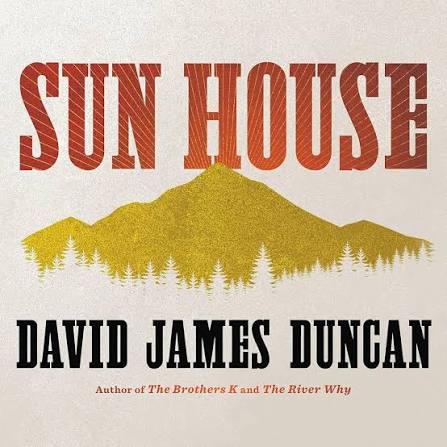
David James Duncan is one of my absolute favorite writers. The Brothers K is magnificent. The River Why, a gem. Then, after a 31-year break from writing fiction, Duncan’s Sun House appeared in 2023. It is a sprawling epic, his magnum opus. I would say it’s one of those rare cases where parts are better than the whole. Some parts are so numinous I’d be fine making them canonical. But overall, it is evidence that everyone needs an editor, even Duncan and St. Paul. (Read Jon Hiskes’s RJ review of Sunhouse here.)
As a wise and weary man now in his seventies, Duncan seems to stake his fragile hope in small groups of people who choose to live closely in trusting bonds of interdependence. In Sun House, that hope takes the form of the Elkmoon Beguine and Cattle Company of Montana. Duncan goes out of his way to indicate what the EB&CC is not. It isn’t religious. It’s not fully economic. It isn’t rigid or especially binding. It avoids all the foibles that typically bedevil intentional communities. It’s not really a community, except that it is.

Perhaps Duncan’s Elkmoon Beguine and Cattle Company is a somewhat unrealistic, a bit idyllic.
Yet I found myself touched and also a bit unsettled. Maybe I felt remorseful, that I had let go of a one-time dream, not worked hard enough to make it happen. Maybe I was a smidge resentful that Duncan seemed to be dispensing advice that neither he nor I could fully accept or embody. And maybe I had simply been beguiled by a novelist’s masterful prose.
- Did I give up too quickly?
- Did Duncan really mean it?
- Had he himself ever really lived in deep, intentional community?
- Even allowing for some idealism, is this where fragile hope really can be found?
I wish I knew.
Plan B
At this stage in life, I am not at all inclined to make a radical jump into an intentional community. But when I look at my life, I realize the church has played a somewhat similar role. It has been my Plan B. It’s about as close as I’ve come to that intentional community I dreamt of years ago. Yes, of course, I know the church is plagued by hypocrisy and superficiality, scandal and schism and every sort of malignant -ism. And yes, because I’ve spent my vocational life in the church, perhaps I have a vested interest in finding hope there.
It is a well-worn metaphor, but for me the church has been something like a rock polisher. Over the years, I’ve been tossed, turned, and rubbed by the grit of ordinary church life — commitment and trust, betrayal and beauty, disappointment and delight, sacraments and sermons, anger and love, and so much, much more. Most of the polishing has happened gradually. But there have also been moments when large chunks broke off suddenly and painfully.

Whatever sanctification has happened to me, it has happened through years and years in the daily grind of the church. Showing up, staying, serving, being served, forgiving and being forgiven, tumbling into grace, living in community with other rough-edged people.
That’s why I’m sad, honestly hurt, that so many good people have left the church. I’m not at all doubting their stories or minimizing the things that drove them away. Nor is my aim to say “Please, pretty please, come back!”
I am saying, however, that like the Elkmoon Beguine and Cattle Company, I still stake my hope in community. Not so much the “Christian communities” that were on our list of marriage goals, but intentional, enduring bonds of friendship, commitment, and interdependence. And honestly, I would invite you to look for this and invest in it as well.

13 Responses
Very similar for us. Melody and I met when she joined up with the “intentional Christian community” I was part of, the Logan Street Covenant House. When we married, we moved into the Worden Street Community. We ended up committing to ordinary local churches, wistfully wishing for deeper and more radical community. I learned to stop judging local congregations for not being the intentional communities we longed for and to stop trying to make them so. But your main point is what I really value: these ordinary conventional boring Protestant congregations formed us and sand-papered us and resisted us and polished us and realistically loved us in ways we had not, in our idealism, anticipated. We still long for something more than our conventional private home with garage and riding mower on a half-acre lot, but on the whole we are very grateful for what we have received and experienced.
I loved this, Steve.
Steve’s main point that you mention, Daniel—I value it too, deeply. And I think that seeing our boring ordinary conventional Protestant congregations through the eyes of someone who never had it, who longed for it, who came to it later, has given me a greater appreciation and thankfulness for it. Thank you for this post, Steve.
Cathleen and Daniel, we are always told about and always looking for the way a minister “changes” a congregation. Yet, does it take hindsight to realize how much being in ministry changes the minister? And not just ministers. And I don’t think anyone is presuming that life in a rock polisher is always positive and pleasant.
Love the picture, Steve and Sophie!
As I began to read, I thought you were going to go toward long marriage being the community that you committed to. That I’ve loved and tussled with, that has been a struggle and a delight. The local church has also been a great joy. And now, a shaky ground on which I stand.
Thank you always for stories which nudge. And Happy Anniversary month.
Hi Jan, probably could have gone that way too. Stanley Hauerwas, I believe, once called marriage a form of martyrdom — only half-jokingly. Parts of us die in marriages, not always for the better, but there is also a lot of “dying to self” in a long marriage.
I love this essay because of the timely question it raises. Community? Somewhat disappointingly, I doubt David James Duncan views going to church like “filling the gas tank”(Ann Lamont) but he is certainly a truth seeker and values community. May be the community we find depicted in Theo of Golden is a good sample- sort of. The recent actions of the CRC are a huge disappointing blow to community. The Israelites were a community. But may be the best we can hope for now in a church community is “sort of” or “somewhat”. It remains worth it! I am appreciating the community of RJ readers and writers. It has helped. Thank you!
Happy Anniversary Steve. As usual, you write about things I have thought about and couldn’t fully put into words. Thank you.
Loved your article. I believe I have been part of a variety of communities. My church (CRC) isn’t as inclusive as I would like, but there are people there with stories of life and there is my small group.
I am now part of the Raybrook Community. It is a wonderful place of belonging even though we do not all agree. We are here to support and encourage one another and are blessed by it
I also was intrigued by Christian communes when I was in college, something like how the church was described at the end of Acts 2. The closest I ever got to it was living in the famous Heemstra Hall at Northwestern College, a comparison I made when I spoke at our graduation. I also lived in a commune of sorts between college and seminary, but I knew it was a very temporary stint. The host couple were gracious, but I invested more in some folks who lived there than others. It didn’t help that I shared in very few meals with the group, because I was far more interested in eating with my girlfriend (who is now my wife) who lived elsewhere in town. Also, I thought it was too hard to find space to be alone. I like community interaction, but it saps my energy if I don’t have time alone. Maybe that’s my individualistic American coming out. I agree with you, Steve, that church life is one good source of community, but I can’t help but wonder if the relationships felt deeper because I was the pastor in whom people would confide. I’m guessing that for many church members the relationships were generally satisfying, but relatively superficial. And happy anniversary!
I wonder if the longing for community expressed here is a universal longing divinely implanted in us by our Maker. I’ve been blessed (mostly) by the church and academic communities I’ve belonged to, though I’m aware that the fringe members who stayed separated from the center did not necessarily share that blessing (a sad reality, perhaps, of any intentional community?).
And yes, Theo in that wonderful parabolic story embodies the calling to fulfill our common longing.
Thanks for these encouraging reflections. Our congregations are not only “boring, ordinary, and conventional” (as Cathleen wrote), but also broken, sin-infected, and often disappointing. Just like the world that Jesus came to save! Except that the real ekklesia, despite their weaknesses, also are held together by Holy Spirit infused people. God made us to crave that, and we should not let the disappoints deflect us from it.
Does living on a college campus count as living in a Christian community? My spouse and I were residence directors (she was official, I was the “adjunct”) at Trinity Christian College in Illinois for seven years, entering with a 3-yr-old and leaving with three kids and a sheltie. . . 🙂