
One of my core childhood memories: playing in the late afternoon at my grandparents’ house—the city sidewalks were a novelty for kids who lived on gravel country road. Grandpa’s old Buick would ease into the driveway, and he’d jump out, wearing his work blues, and pull Pop-Tarts out of his pocket. Still warm from the factory line.
My Grandpa Woodwyk—or Woody, as everyone, including us grandkids, called him—was mischievous. He had a glint in his eye and a penchant for (mostly) harmless trouble. He often suggested that we break the rules, despite my grandmother’s chiding. He’d take us to McDonald’s and tell us to bring our empty french fry sleeves up to the counter to ask for a refill. He could ride his bike backwards, sitting on the handlebars and pedaling in reverse. I once saw him go head-to-head with a police officer who stopped his patrol car near his curb to scold Woody for burning the decorative grasses in his front lawn in the fall. “Go find some real crime to fight,” he grumbled.
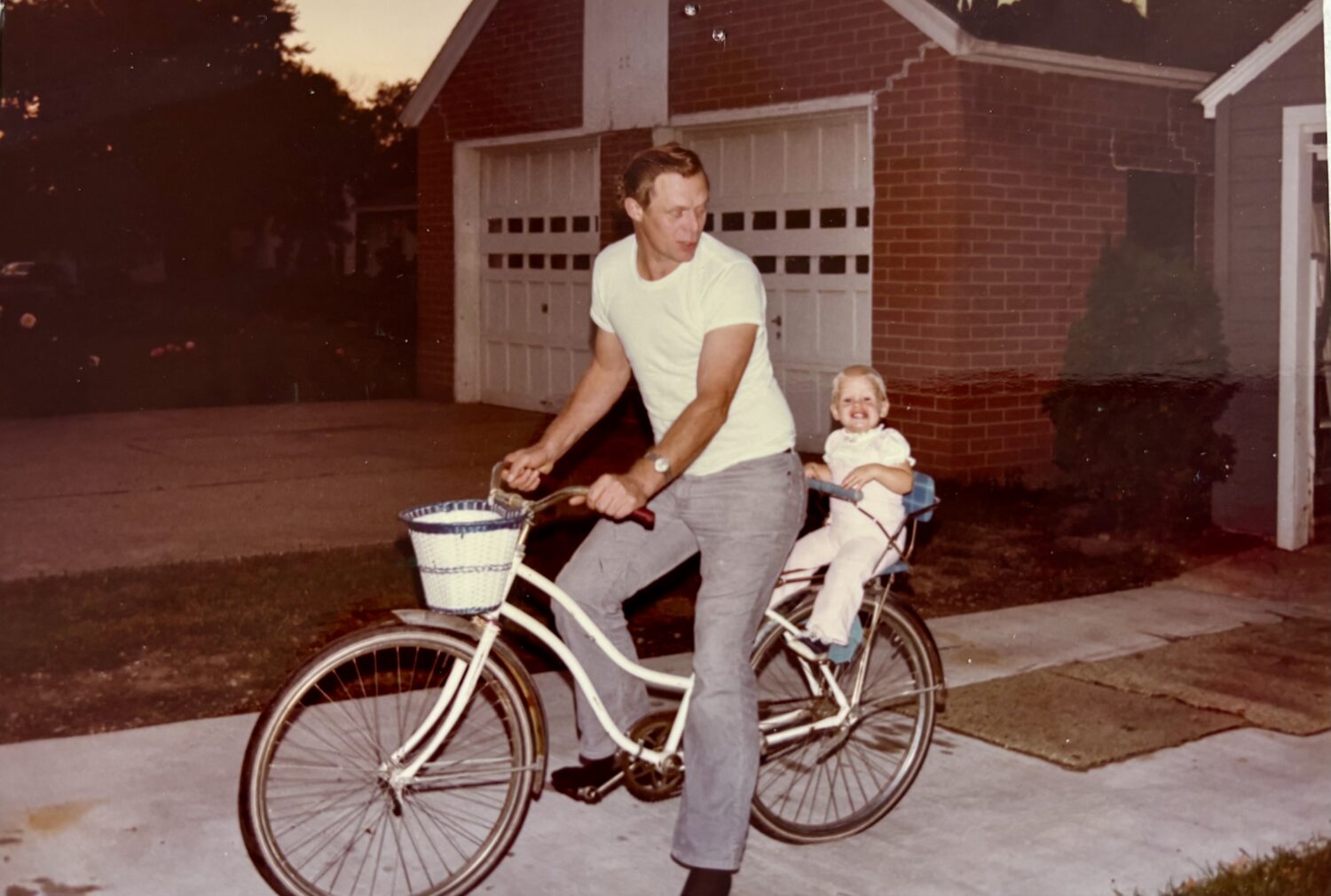
Woody dropped out of school in 8th grade after the teachers at his Christian school told him he “wouldn’t amount to much.” Married young in the family farmhouse because Grandma was already pregnant (I shared her here story several years ago), Woody had five kids by his mid-20s. He worked in factories most of his life, moving in and out of jobs. Money was almost always tight, and work was a necessity, not a calling. But I never heard him complain. I imagine his wit and antics made his friends on the factory line laugh as hard as they did us grandkids.
He pronounced “lasagna” “basagna,” and when corrected for the umpteenth time, clearly fed up, he exclaimed, “It will always be basagna to me!” When I was in college and studied abroad in Vienna, Austria, he asked me for years after about my trip to Australia. When he would meet my college roommates, he would ask each of them the same question: “Are you going to be a nurse or a teacher?” When he met my friend with an eyebrow ring, he paused a beat longer and asked, “Hmmm. . . Are you going to be a hairdresser?”
Woody lacked a formal education. He was often politically incorrect. And he was earnest. He was kind. He was real. He showed up when it mattered. He was generous; the first to open up and offer what little might be in his wallet. He loved people well. He loved me well— and I loved him.
He was vehemently opposed to authority and elitism. Especially untrusting of anyone or anything who might make him feel small. I think he was exhausted by the weight of shame. Those words about “not amounting to much” played like a refrain in his head.
And while part of him might have wanted to prove his teachers wrong, another part of him was determined to live in a way that proved a small life could be a good one: the steady rhythm of work, planting a flower garden, raising five kids in a 1,000 square-foot house, rollerskating weekly with grandma from the time they were dating until she was diagnosed with ALS. There was wisdom in his simplicity and contentedness in his demeanor.
Woody wasn’t perfect. He was well aware of that; he didn’t need reminding. I could brag on his humility, but I also know, the way a grandkid comes to know things only with age, that his humility was less a matter of character than of inheritance. Less something he cultivated than something life decided for him.
And yet, even though he died just a few years into his 70s and has been gone for nearly 18 years, I can still hear him warn about the danger of “getting too big for your britches.”
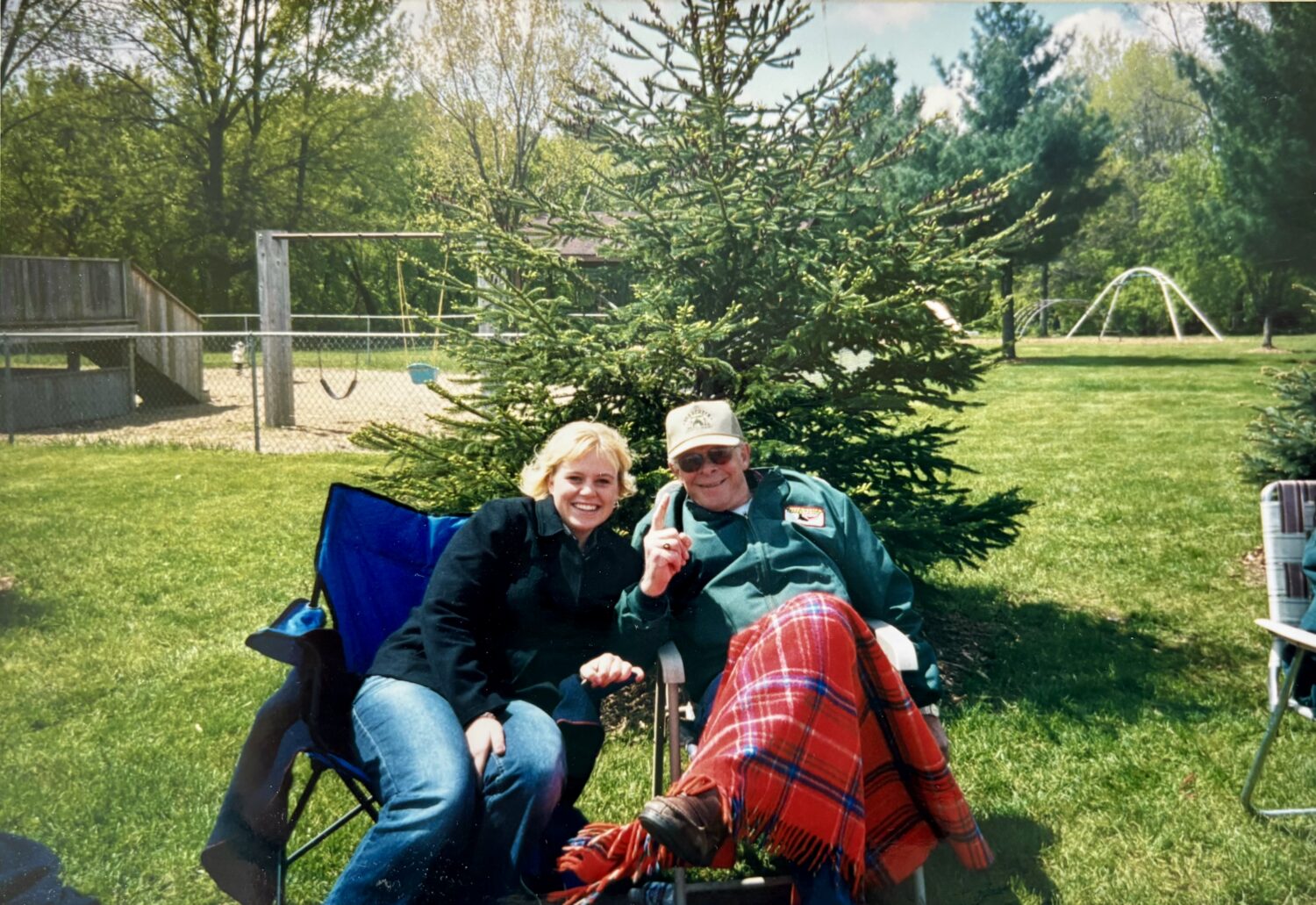
Recent memories of Woody have me thinking about the quiet hierarchies that emerge in every community, the temptation to build ourselves up by making someone else feel small. Shame is what gives those hierarchies their power. It can make our conversations, our communities, our churches, and even our countries feel like unsafe places to show up honestly—or at all.
The trap we can easily fall into—and when I say we, I include myself—is mistaking certainty for faithfulness. We become so focused on being right, so sure-footed on our path, that we stop asking who our certainty is making smaller. We forget that our rightness matters little if it leaves no room for love, especially for those on the margins, for those easiest to dismiss, overlook, or cast off.
Elitism is incompatible with the gospel.
In the Parable of the Great Banquet, it’s the lost and least who get to feast when the rich and important have too many trivial excuses to show up. Again and again, from the Good Samaritan to the Pharisee and the Tax Collector, Jesus tells stories that consistently upend human hierarchies, welcoming the humble while exposing the blindness of those who lean too heavily on their privilege.
I use the word trap because this kind of thinking is too easy to fall into, to fall into a bitter pattern of pretension, off-hand remarks, and classifying people as lesser. It’s its own kind of wall-building, and is done on both sides of the political aisle—turning immigrants into threats, rural neighbors into caricatures, or anyone unlike us into someone or something easier to dismiss.
Sometimes I wonder how Woody, or any of my grandparents, would respond to the world we’re currently living in. But maybe there is grace in not knowing. Memory has a way of preserving what matters most. We keep what was life-giving without pretending they—or we—were without flaws.
If there is such a thing as generational trauma, perhaps there is generational grace, too.
What makes the Gospel so convicting and appealing is that there is room for more grace. Redemption is always possible. There are no limits on love. For the stranger, the enemy, and for ourselves. But as soon as I cross over to a place of certainty, I’m likely to be tiptoeing too closely to self-righteousness, convicted of letting my ego out of the box.
That idea of not “amounting to much” was unfair, mean, maybe even cruel. In the upside-down world of the gospel, it is the other way around. Those who aren’t chasing prestige find freedom. Those who aren’t grasping for status discover enough. Those who aren’t preoccupied with themselves have room to love. In the world’s “not much,” the abundance of the gospel is found.
I don’t much care for Pop-Tarts anymore. Once your grandpa has gifted you one warm off the factory line, there’s not much that can top it. The memory of those treats is much sweeter than a box off the grocery store shelf would be today.
But I’m grateful to still carry Woody’s voice in my head, to have grown up withing the folds of his big personality, audacious love, and to have inherited, in small ways, his humility and his freedom from needing to be more than he was.
Turns out the best gift Woody gave me was never the Pop-Tart. It was the reminder that a life doesn’t have to measure up to the world’s standards to be full of love, abundance, and grace.

21 Responses
What a gift your grandpa was! My husband received the same message from his teachers at a Christian school. I know he lived to prove them wrong. And they were wrong. At his memorial service, many people shared stories about how he had always been willing to lend a hand, always with a smile and laughter.
I loved this. And I remember how openly kids were sorted and classified according to value at Eastern Christian Junior High. Of course it happens in other schools too, public and private, but it rankles because it is so anti-gospel. And now looking back I dearly wish I could have been fun and mischievous like your grandpa was. Go Woody.
Dan, I remember exactly the groupings in at EC jr high and sometimes still associate some classmates with those numbers. So sad.
Ah, but Theo is living your dream now, Grandpa (Daniel)! May he continue to be fun and mischievous!
Indeed he is, right here at Bobs Lake, Ontario.
Thanks for sharing your grandpa with us, Dana. Your reflection reminds me of the truth Paul shares with us in I Thessalonians 4:9-12. I needed that reminder.
Beautiful story of grace and humility, Dana. Thank you again!
So much here to relish and reflect upon. Thank you! And having experienced Pop Tarts fresh out of the oven so many summers ago (perhaps my path crossed your Grandpa’s?), I am in full agreement that they can’t get any better than that!
Powerful story, Dana. Thank you!
This was such a blessing to read this morning. Woody was such a kind and mischievous grandpa.
Thank you, Dana. Your story is the kind I can only hope my grandchildren will one day remember and tell with the same warmth, love, and gratitude.
Beautiful, Dana! Thanks for reminding us that the best things in life are free (or almost!). As a grandma who just ran out onto the dock to take a picture of the ‘big fish’ my grandson caught – I, too, hope to be remembered for those fun and meaningful things in life. For love, for life, for joy!
Dana! Your grandpa! Your writing! Chef’s kiss to both.
Thanks for this, Dana. You’ve described my dad (and mom) exactly: “Living in a way that proved a small life (1000-square foot house–yup!) could be a good one.”
Thanks, Dana, for giving us a glimpse into your remarkable grandpa. I like your line that elitism is incompatible with the gospel. I saw that in my own Dad. He was the only one of his family of eight to go to high school (and later college for a BA and a masters), yet I never saw him act like he was better than his siblings (or anyone else). He was just their brother. At my father’s graveside service, his oldest brother disrupted the formalities with “This is for you, brother John” and proceeded to play a hymn on his harmonica.
Your Grandma and Grandpa Woodwyk were unforgettable! Your grandma’s laugh, which reverberated over the entire Hudsonville Eagles stadium during football games, and your grandpa’s rendition of “Elvira”, are treasured memories!
Oh, my word! Amazing writing and profound wisdom. Thank you for the irenic tone and grace modelled in this post.
I had to look up “irenic”. Totally agree! Wonderful article!
As always, your story is the only story and your writing is music; we find ourselves reading with our hearts.
Let’s write a memoir.
❤️🙏❤️
Thank you. I would argue that the political elites made a critical error in 2016 in ignoring people like your grandpa. They (we?) took them for granted and even “dismiss(ed), overlook(ed), or cast(ed) off.” If people seeking national office had shown patience, grace, and attention at the time, we could have avoided a decade-plus of pain.
Wonderfully written … how the light of love shines through the story you tell … no one’s perfect, whatever that means … but love is love … we know it when we see it, feel it, receive it, or give it. He managed a lot of love along the way. We can’t ask for anything more. Thank you for sharing.