
Sometimes we need to slow down and take time to smell the proverbial tulips, but it still really irritates me when out-of-towners cannot navigate a Michigan Left and leave me stuck behind them on a red turn arrow that means “yield” (and there’s a sign saying as much!).
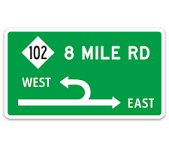
Perhaps God is trying to teach me lessons about patience; perhaps this is simply another chance to model calming breaths in front of my children in the back seats.
This struck me again a few days ago when my wife and I spent some time in Colorado for a family wedding and anniversary trip. We spent a few glorious days surrounded by mountains, cliffs, valleys, lakes, forests, and tundra.
While in the middle of all this beauty, the tension between efficiency and wallowing was palpable. There were folks who wanted to speed up and down the mountain highways; others wanted to pull over at every available overlook. Google Maps told me one route back to the airport was the most efficient time-wise while another was the most efficient fuel-wise. My uncle-in-law suggested still another route that offered spectacular views.
Efficiency is often in tension with other parts of the good life, and I’m increasingly convinced that its place in a ranking of what makes for true human flourishing is lower than its waxing status.
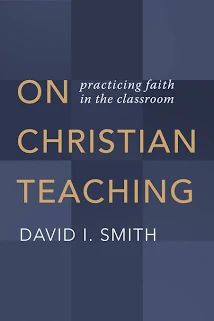
As a teacher in both secondary and higher education, I often see this dilemma in my classrooms and schools. Some temptations to prioritize efficiency over actual learning have been around for generations: just memorize the terms for your religion class’s matching quiz without really understanding or internalizing them (example borrowed from chapter 1 of David I. Smith’s phenomenal On Christian Teaching). Take the path of least resistance by cooperating instead of truly collaborating (e.g., “I do questions 1-3 and you do questions 4-6; then we swap.”). Use SparkNotes instead of reading the novel. And, since the temptation applies to teachers as well: just give multiple-choice tests to make grading easier via the Scantron® machine or Google Forms.
Then, of course, generative AI arrived.
The temptation to outsource creativity, critical thinking, reading, writing, or reflection to AI is immense. In a recent Atlantic article, Rose Horowitch made the educational consequences of such thinking shockingly clear: for some students these days, “reading [is] an unnecessarily burdensome way of acquiring knowledge.” Moreover, “by asking students to read…professors are arbitrarily withholding information from students by forcing them to get it through this more difficult medium.” This complaint, of course, is so tragically misguided because one of the main reasons we read is to get better at reading, writing, and thinking.
But that argument seems to hold less and less weight these days.
I recently had a plagiarism meeting with a parent who insisted that their family prioritized efficiency in all things—“Not integrity? Not learning?” I wondered silently. Thus, this parent didn’t see anything wrong with using AI for an initial draft of an essay as long as the student edited most of the sentences before turning in the final draft of “their” essay.
Even before the dawn of ChatGPT, educational gurus were talking about “grit” and the benefits of doing difficult things in an age of gamification and shortening attention spans. I still believe in the benefits of doing hard things to increase our emotional, education, social, even physical stamina—someone else can insert a gym anecdote here—but I feel like the conversation is missing a theological or spiritual dimension.
I don’t just mean resisting the urge to ChatGPT this week’s sermon or congregational prayer.
I think there are deep costs to be paid for worshiping at the altar of efficiency. We lose a facet of our Image-Bearing when we cede Culture Making to machines and algorithms. Yes, we lose out on the learning and growth that happens through struggle, but I also think our souls also get malformed as they chase minimum friction.
We pervert more aspects of our created nature and our communities when we prioritize efficiency over other virtues like prudence or charity. Valuing efficiency above all else commodifies our relationships and damages our loves. Our corrupted moral compasses seeking efficiency above all else can justify all kinds of means to achieve our desired ends. It might be a slippery slope from efficiency-maxxing to euthanasia, eugenics, or Social Darwinism, but I cannot help but see increasing efficiency-worshiping and decreasing empathy as connected.
I haven’t figured out exactly how to articulate this problem, or how to tackle efficiency’s enticing siren song in my own life, but I know that efficiency-supremacy makes me increasingly uncomfortable and discouraged as its stock rises in the contemporary culture and classroom.
There should be no love lost between the Christian and needless waste, of course, but perhaps we need a “slow thought” movement similar to the “slow food” movement. I will ruminate on that and get back to you. . . in an untimely manner.
Header photo by Andrea De Santis on Unsplash

5 Responses
I used a political cartoon in my classes that showed the figure of a person morphing into that of a dollar sign. Our economic system encourages the commodification of almost everything. No wonder we use efficiency as our measure of success. It’s this type of thinking that leads to the demise of liberal arts education.
The political cartoons, the Billy Joel pop songs, the Intermission book read-alouds, the Jeopardy style test review games, the unit-related novels, the US History textbooks, the Newsweek (not WORLD) periodicals . . . you used a whole range of tools to teach about the deep tension between a $$$ orientation of manifest destiny, robber barons, and union busters, and a ??? orientation of walking humbly, loving kindness and doing justice. One heck of a liberal arts educator, and your influence has been vast! So glad the above essay’s author is pursuing the same priceless and inefficient career.
Caleb, you are so right in seeing this trend in all our lives and in education! We are teaching our children to complete things, not to question, seek, and explore, much less take ownership of their learning. Curiosity is a gift, and we need to treasure its wondrous results of showing us individually how our God is so amazingly good!
The long time on the NY Times best sellers list of the book “Theo of Golden” tells me that thousands of people are hungering for and responding to slow stories of love and grace, reacting to our culture’s obsession with speed, efficiency, noise, computerization of everything except the most important things. Author Allen Levi has put his finger on a pulse and people are responding. Check out his hour-long interview with Oprah, with people calling in with their reactions to the book.
I agree with so much of this essay. Thank you.
Yet, I was taught, “Work smarter, not harder.”
I think there is something right with that proverb, but maybe you are suggesting it should questioned deeply. I appreciate it.