
To read more about Dave’s journey, click here.
Four years have passed since the bicycle crash that left me with a quadriplegic injury, and in ways I never could have imagined, it has transformed me.
From the beginning, I knew life would be different. Pain, stiffness, fatigue, and a reduced capacity for both physical and mental endurance would become part of my daily reality. Suffering was not something I could avoid or outthink.
But I also knew I had choices.
I could spend my energy resisting what had happened, wishing for my old life back, measuring myself against who I used to be. Or I could learn how to care for myself, adapt, and discover what it means to live fully within this new reality.
I chose living to the max.
One of the earliest lessons of recovery was realizing that living fully with a disability means letting go of the myth that my worth is measured by speed, productivity, independence, or physical ease.
For me, living ably means caring for my body, mind, and spirit with intention.
The first transformation was learning how to live in my injured body.
My body speaks a different language now, and every day requires me to listen. My sensory and central nervous systems were dramatically reordered by the injury. I need more rest (yay naps 😊). I move at the speed of turtles. I rely on medications, physical therapy, medical equipment, and the support of caregivers.
Over time, I’ve stopped seeing my body as a problem to be fixed. Instead, I’ve come to see it as a companion to be understood.
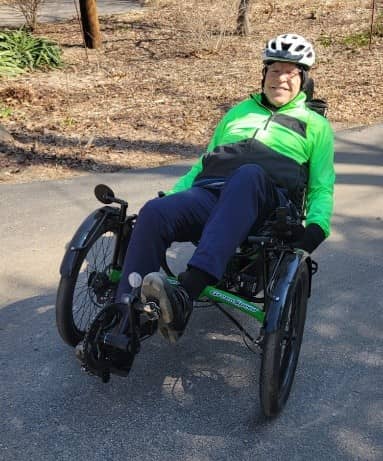
Living ably is not the absence of limitation. It is learning to meet life honestly with the body I have.
Part of caring for my body means following the wisdom of my medical team. I eat foods that reduce inflammation. I exercise every day through warm-water therapy, walking, weight training, and cycling. I’ve explored alternative healing practices and Eastern medicine. What keeps me moving forward is less certainty than curiosity. I’m still learning what recovery can look like.
One of the biggest shifts has been learning to listen. Pain, fatigue, stiffness, and aches are no longer enemies to conquer. They’re information. They’re messages.
The old Dave often pushed through discomfort. Dave Medema 2.0 is trying to pay attention. To live fully in my body is to learn its new rhythms, respect its boundaries, and celebrate what it can still do. Adaptation may be one of the clearest expressions of wisdom.
But recovery involves much more than the body. There is also the ongoing work of aligning my emotional and spiritual life with my circumstances. I experience sadness. Discouragement. Frustration. There have been seasons that drifted dangerously close to depression. Those emotions are real, and they deserve attention because they carry important information. But I have chosen not to let them drive the bus, even though they occasionally hijacked the driver’s seat.
I grieve what I’ve lost. I miss caring for our five acres of woods, wetlands, and the trout stream that runs through them. I miss wielding a chainsaw, hauling brush, building campfires, and slinging dirt. There are still moments when those losses catch me unexpectedly. My tears abide, even though I’ve made peace with much of what is gone.
I have never viewed myself as a victim. Had I surrendered to hopelessness, I would have chosen a life of physical, emotional, and spiritual misery. Instead, I’ve tried to focus on what I can control while learning to accept what I cannot. Over time, I’ve come to appreciate a simple truth: I’m pretty good at doing my best with the rest.
In a strange way, my disability has become my friend. That may sound odd, but it has become one of my greatest teachers.
Living ably in my mind and emotions requires a different kind of courage. It means challenging the critical voice that whispers that I am somehow less because of my limitations. It means questioning the stories I tell myself about what I can no longer do, what feels too difficult, or what I would rather avoid altogether.
More often than not, those stories are worse than reality.
One of the most important lessons I’ve learned is the value of authenticity.
Psychotherapy has helped. Writing essays and keeping a journal help me make sense of my experience. Music has become a doorway into grief, healing, and wonder. Some things can be felt in a song long before they can be spoken aloud. The cry of a dobro. The longing in bluegrass. The lament at the heart of the Blues. Indigenous music shaped by generations of resilience. They reach places words cannot.
I’ve come to believe that a strong mind is not one that never struggles. A strong mind is willing to enter the struggle, tell the truth about it, and allow that truth to do its inner work.
During the earliest weeks of recovery, I discovered another unexpected source of strength: people. I was surrounded by extraordinary caregivers—CNAs, custodians, therapists, nurses, physicians, and even the hospital CEO, who happens to be a friend. Their compassion changed me.
As I watched them care for me, I realized I still had something meaningful to offer in return. I could offer gratitude. Presence. Encouragement. Genuine connection. The pace and depth of my recovery were fueled by relationships. As an inpatient, I found great joy in caring for those who cared for me.
Living ably in spirit means remembering that I am more than a diagnosis, more than a medical chart, and more than other people’s assumptions about disability.
Spirit is where meaning grows. It is where relationships deepen—first with myself and then with others.
My limitations have become unexpected teachers. Disability has cultivated patience, humility, empathy, and perseverance in ways comfort and ease never could.
Meditation has become one of the most important practices in my recovery. It calms my nervous system and helps my body step out of its constant fight-or-flight response. It changes my relationship with pain. Meditation doesn’t eliminate discomfort. It changes how I meet it. Acceptance creates space. I notice pain without becoming consumed by it. I acknowledge and feel suffering without surrendering to misery.
Living fully into my disability is not settling for less. It is discovering forms of fullness I never expected. I am no longer waiting for some future version of life to begin. I am not postponing joy until a cure arrives or circumstances improve.
This life—right here, right now—is worthy of my attention, gratitude, and wholehearted participation. My path is to live ably by caring actively for my body, paying attention to the stories and emotions that arise within and remaining open to the mysteries and movements of spirit. It takes creativity. It takes support. It takes courage.
In the end, living fully has very little to do with having an unrestricted life. Whatever that is.
It has everything to do with meeting life exactly as it is—with presence, dignity, gratitude, and a willingness to keep becoming more fully authentic.
The Transformative Power of Love in Recovery
In my journey toward healing, the support of loved ones was a profound influence. My wife, Fenna, became a surprising and pivotal force in ways that words can scarcely capture.
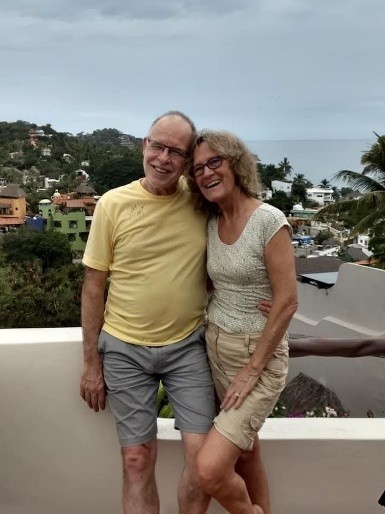
A massage therapist by trade, she is deeply knowledgeable about anatomy, nutrition, and how to mobilize the body’s healing powers.
Fenna curates meals that nourish my body and align with my recovery goals. Each meal is a labor of love, a reflection of her commitment to my well-being. This attention to nutrition has been a cornerstone of my recovery, allowing me to regain strength and vitality.
Beyond the physical aspects, Fenna’s therapeutic skills have guided me through the complex and agonizing challenges of recovery. She is skilled in listening without judgment and offering insightful guidance and coaching. We’ve co-created a safe space for me to express my fears and vulnerabilities, allowing me to confront my spiritual, emotional and mental barriers that accompany my physical ailments. We delve into the deeper aspects of recovery, exploring not only what it means to heal but also how to cultivate acceptance, resilience, and hope.
Fenna’s spirituality plays a crucial role in my recovery. Her spiritual practice has taught me the importance of mindfulness, self-compassion, and listening to my body. Through meditation and reflection, she encourages me to connect with my inner self, fostering a sense of peace that transcends the anxiety and pain of my physical challenges. This spiritual dimension of healing has been transformative, allowing me to view my recovery not just as a goal to achieve but as a journey of self-discovery and growth.
The commitment Fenna shows to my recovery is unwavering. She stands by me through every setback and triumph, reinforcing the belief that I am never alone in this journey. Her presence is a constant reminder of the strength of our ever-growing bond. Our marriage is a partnership built on mutual respect, understanding, and an unyielding commitment to each other’s well-being.
An accident like mine can ruin relationships. It strengthened ours, and we have grown a resiliency that otherwise might not have been discovered.
3 Responses
Thank you. You have given me much to ponder.
O Dave, such a witness from you today. Inspiring. Such a tribute to Fenna as well.
So enjoyed our evening with you and Fenna at my sister Jo’s condo.
You would never know you were “quadriplegic.” Mind, body, spirit. Living life to the full, each and every day.
All the best to you and yours and the world you impact. What a witness. Thank you, again and again.
Thanks Dave, a very meaningful and inspiring read.