
Canada Day (July 1) and Independence Day (July 4) are just past. This is the second installment of reflections by Canadian and US citizens, briefly sharing a patriotic memory — a time or experience when they felt especially proud of and pleased with their country. Last week’s installment may be found here.
White Buffalo Girl
James C. Schaap
The only means of getting man and woman, beast and wagon across the rain-swollen Niobrara was by rope, hand over hand. Dozens of oxen and as many as 500 horses had to get to the other side, as did 523 Ponca men, women, and children.
The rain wouldn’t stop. The Ponca disassembled all those wagons and shouldered through and over the raging Niobrara. It took a day to recover, yet another rainy day.
In May of 1877, someone in faraway Washington had determined the Poncas of eastern Nebraska would leave their villages and everything they owned and walk to Oklahoma. Imagine 500 people in soggy early May trudging up and down endless muddy hills along the Missouri. They didn’t want to go—just plain hated the idea of leaving the place they had lived for generations. That last night in the village, no one slept. There was too much crying.
Is it any wonder people took sick? Should we be surprised that the Ponca’s Trail of Tears has countless unmarked graves?
They’d not made life troublesome for anyone. They hadn’t attacked wagon trains or stolen horses, were never belligerent. From the Poncas, Washington had little to fear. But the government determined the Ponca had to leave because they were Indian.
A century and a half later, I drove my Subaru out to Neligh, Nebraska. It was a foggy morning, not much for photography, but I had more specific interests. I’d never been to Neligh. Took me longer than I thought it would, but I was determined.
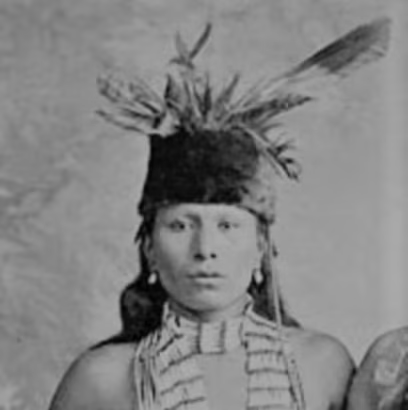
1863-1950
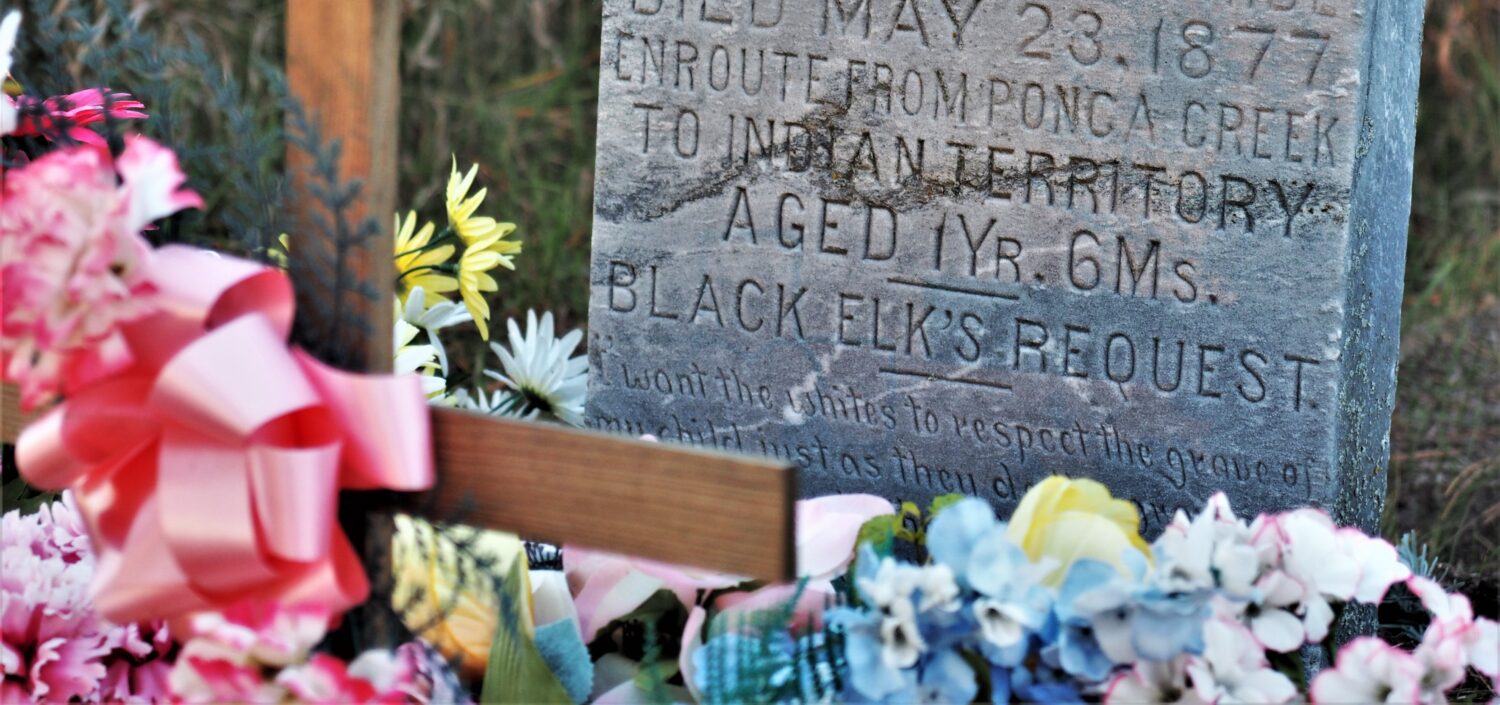
On May 23, 1877, not far from the Elkhorn River and near a tiny frontier town, the little daughter of Black Elk and Moon Hawk, succumbed to pneumonia. White Buffalo Girl was all of 18 months.
Her parents, beyond grief, watched her die. A carpenter nailed together a wooden cross. The family was Christian.
In a cemetery called Laurel Hill, up above the town, Black Elk, distraught, talked to White folks who, with the Ponca, had gathered around that wooden cross.
“I want the Whites to respect the grave of my child just as they do the graves of their own dead,” Black Elk said. “The Indians do not like to leave the graves of their ancestors, but we had to move and hope it will be for the best.”
Imagine that setting, up on a hill above a thick strap of trees that follows the snaking river below through an endless ocean of grass.
“I leave the grave in your care,” Black Elk told those White settlers. “I may never see it again. Care for it for me.”
And so they did. And so they do yet today, 150 years later.
You’ll find Laurel Hill cemetery, as I did that morning, way atop Neligh; and you’ll find there, just a short hike from the road, a stone that memorializes a Ponca child named White Buffalo Girl. It wasn’t at all difficult for me to find when I finally arrived. Her grave site is the only one that stays decorated all year long. Just get out of the car and look for a wooden cross, and flowers, lots and lots of flowers.
It’ll be good for you to visit—trust me. Five or six generations later, the people are still generous with their promise to Black Elk and Moon Hawk. The neighbors still keep up White Buffalo Girl’s grave
Any season of the year, that blessed hill of flowers alone out there amid the stones reminds me of what we in this nation could be, even during the hellish bigotry of the old west and, more importantly, what this democracy can still be all these years later on our 250th birthday.
James C. Schaap is a retired English professor who lives in Sioux Center, Iowa.
*******
Welcomed to the Canada House
Kathryn Vilela
I grew up in rural northwestern Ontario, a white settler kid who believed everything she was taught about the brave white colonizers who came over from Europe. I believed that they were primarily benevolent Christian explorers, who found good things in the New World and shared good things with the native inhabitants they met.
The Truth and Reconciliation Commission’s groundbreaking work from 2008-2015 publicly unraveled that “whitewashed” history, as did subsequent nationwide investigations into the generational horrors of Canada’s Indian Residential School system. In adulthood, as I learned more, and did more listening to Indigenous people, I was becoming much less comfortable with the ideas of patriotism that I had blithely accepted previously.
Because of this, the idea of celebrating Canada had lost its shine for me. So when our family got an invitation from good friends Katie and Steve to join them at their house for Canada Day, I paused.
But, knowing our friends as we did, my husband and I were pretty confident that this Canada Day gathering wasn’t going to be just burgers, beers, and backyard fireworks, and we were right. Steve and Katie were taking the same learning/unlearning journey as us about the truth of what our country (and our churches) has inflicted on Indigenous people, and they choose not to be passive about that journey in the slightest.
When we arrived at their house, we were warmly welcomed into a houseful of families and friends. One couple, Leo and Allison, were visiting from Eabametoong First Nation in northern Ontario.
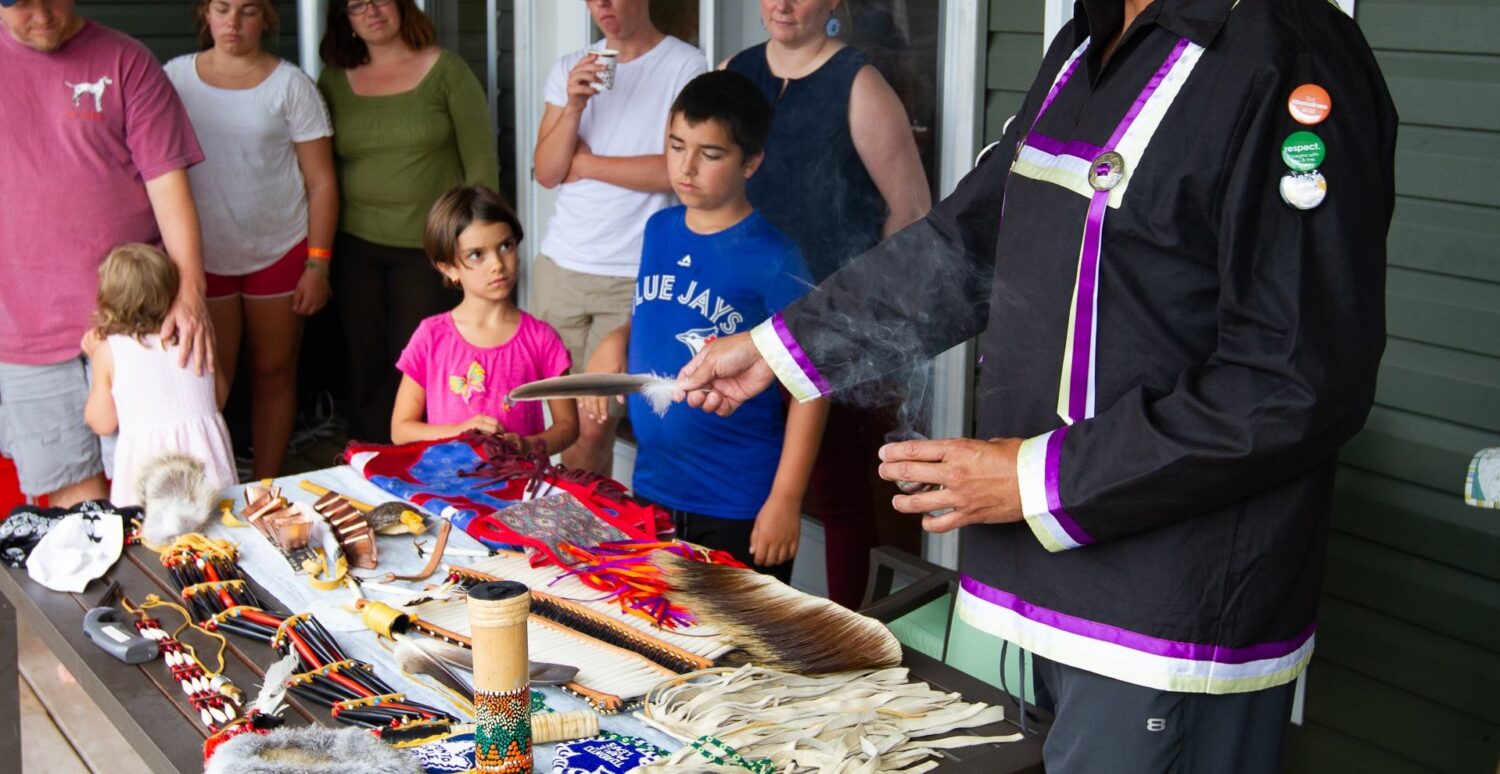
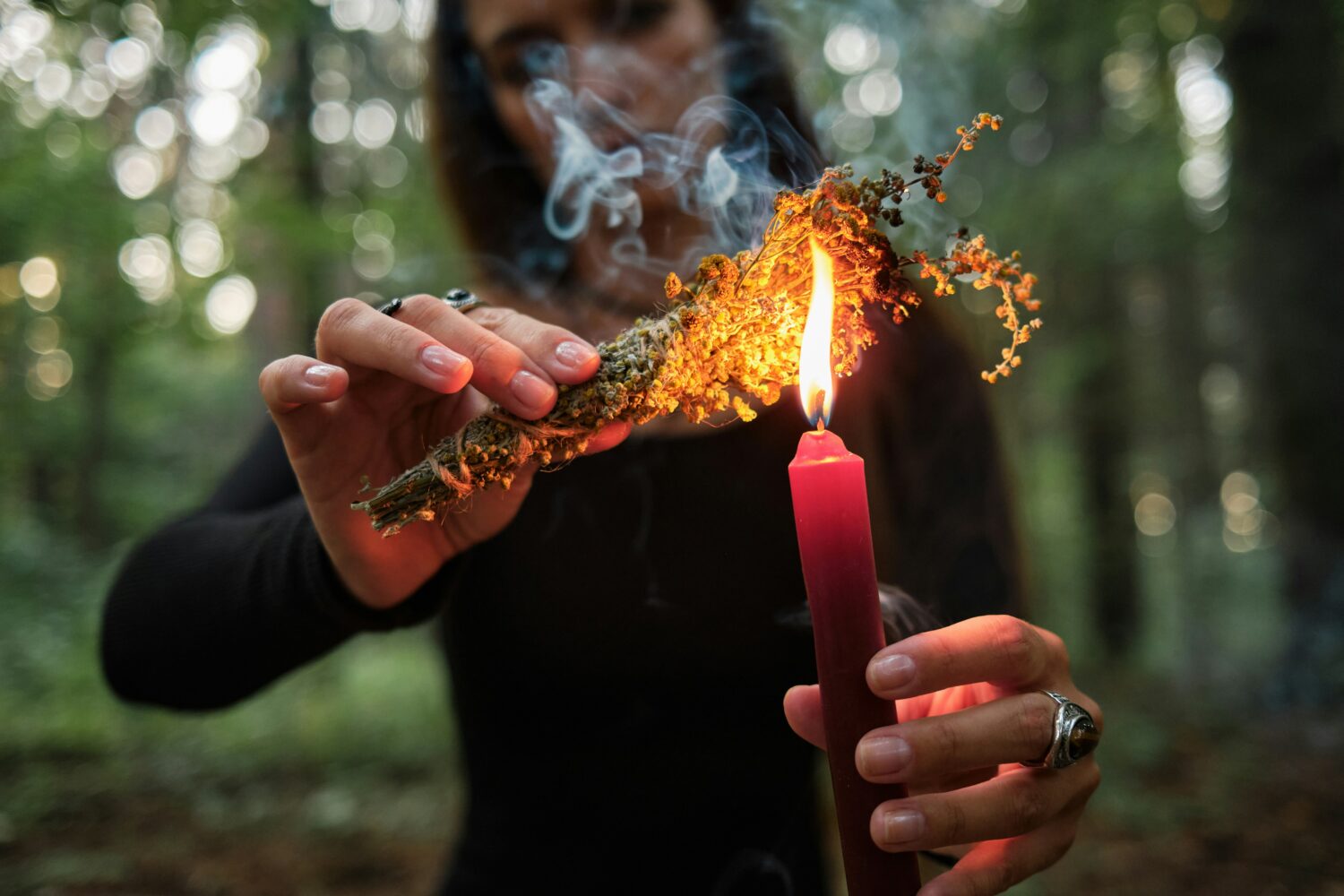
Midway through the afternoon, we gathered on the deck, where Leo had carefully laid out the pieces of his regalia he wears as a traditional dancer at powwows. My kids were wide eyed in rapt attention as Leo performed a smudging ceremony and then told us about each detailed element of the regalia – its purpose and its story, the special meaning it held for him, how to put it on as part of the whole, and how to dance in the regalia.
Leo’s gentle humor along with his sincere reverence made him a captivating storyteller. After his teaching, we all fell back into easy conversation. But along with the fragrant wisps of sage, sweetgrass, cedar, and tobacco, we all inhaled a fresh sacredness in the air as we reflected on what Leo had shared about his place in the long, long story of his people in this place we now call Canada.
Patriotism asks us to situate ourselves in a story where we are proud of ourselves and delight in where we come from. As we hear and re-tell that story, we reinforce both our sense of identity and the validity of the story itself. And yet, as Patty Krawec writes in her book Becoming Kin, any identity story must be approached with objectivity and caution: “The stories are like isolated snapshots of the American [or Canadian] dream, with important context cropped out of the image. . . It is incomplete, but it is not inaccessible, and nothing stays buried forever.”
Krawec adds a challenge to us settlers as Indigenous peoples’ stories rise up more and more. “These histories are emerging, and the stories are being told. What would happen if you listened? What would happen if you, the churches and countries who settled upon us, listened to our histories and heard the good news that we have for you?”
Later in the summer, my youngest daughter said out of the blue, “Mom, do you remember when we went to. . . the Canada House. . . ?”
For a moment, I wasn’t sure what she meant, but after a few clarifying questions, it was clear that she was reflecting on our visit to Katie and Steve’s house, and what we learned from Leo. For months afterward she would occasionally repeat that question, and I would smile and answer yes, I do remember, and we would re-tell the story of that day.
It made me glad that she was beginning to situate herself in a fresh identity-story, one where she, the daughter of a settler and an immigrant, had been welcomed into the Canada House. The house didn’t belong to her, but it was full of people that she could meet, laugh with, share a meal with, and learn from. And in those connections, she could deepen her understanding of who she is, where she is, what our different and shared histories are, and where we’re headed together.
Each of us is a beautiful piece of regalia that has our own meaning and story, and we are connected as part of a sacred whole. That connecting spirit of the Canada House – maybe we could even call it patriotism – is a spirit I can get behind with my whole heart.
Kathryn Vilela is an academic advisor at Queen’s University in Kingston, Ontario.
*******
We the People
Jon Witt
I cried the other day while driving cross country on I-74 in the middle of Indiana when Woody Guthrie’s This Land Is Your Land popped up on my playlist. That’s nothing new for me. Whether it’s the Star-Spangled Banner, PBS documentaries, or watching the VFW float go by during Pella’s Tulip Time parade, I choke up every time. I can’t help myself. And, to be honest, I don’t really want to. Because, for me, there’s something beautiful about the promise of America.
One of the most moving elements at the heart of that promise is the expansion of inclusion over time. Both the Declaration of Independence and the U.S. Constitution begin (or nearly so) with the word “We.” After much turmoil, strife, and struggle, who gets included in that “We” has grown over time.
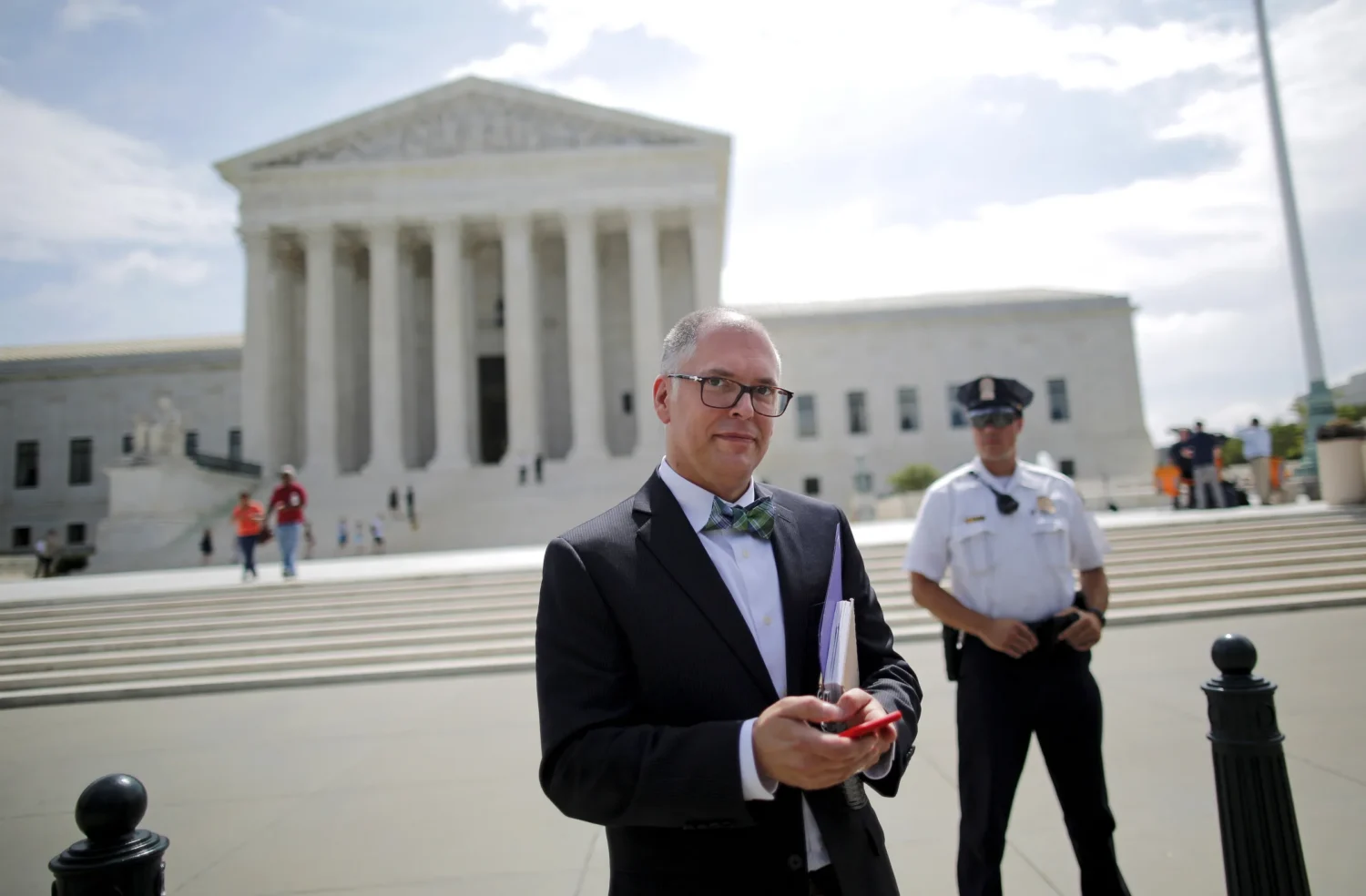
One such pivotal moment happened on June 26, 2015, when the Supreme Court handed down its decision in the case of Obergefell v. Hodges. I was glued to my TV as it unfolded, watching reporters waiting for the ruling, not sure which direction it might go. And then, something fundamental changed.
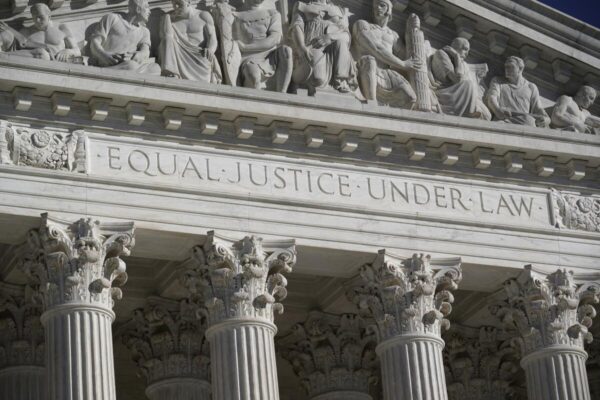
Standing on the Supreme Court steps, Jim Obergefell responded to their historic decision legitimizing his marriage to his husband. He said:
Today’s ruling from the Supreme Court affirms what millions across this country already know to be true in our hearts: our love is equal. That the four words etched onto the front of the Supreme Court “equal justice under law” apply to us, too.
I cried.
Jim and his partner, John Arthur, had been together 20 years. Two years earlier, John had been diagnosed with ALS and his health was rapidly declining when the Supreme Court struck down elements of the Defense of Marriage Act (DOMA) resulting in Federal recognition of same-sex marriage benefits.
In response to the news, Jim popped the question and John accepted. But they couldn’t marry in Ohio, their home state, where same-sex marriage remained illegal. With the help of friends and family, they chartered a medically equipped jet to Maryland where same-sex marriage was an already-established right.
The Cincinnati Enquirer chronicled their wedding journey including a recording of the ceremony itself which took place inside the plane on the Baltimore tarmac. The video and ceremony are powerful testaments to their love for each other. Seriously. Go watch it. The video ends with a quote from John: “I’m very proud to be an American and able to show, openly share, my love for the record. And I feel like I’m the luckiest guy in the world.” Three months later, John was gone.
Before his death, they learned that Jim would not be legally permitted to be listed on John’s death certificate as his surviving spouse due to Ohio’s same-sex marriage ban. They decided to fight for that right. These were precisely the kind of principles and protections advocates for same-sex marriage fought for. Legalization opens access to various benefits associated with marriage, including better tax rates, equal status as parents, and both physical and legal access on matters of health and end-of-life care.
I was deeply moved by Jim and John’s story. I found it difficult to understand why this had been such a contentious issue for so long.
Theirs is but one story among millions. Their case, along with those of the 30 other named plaintiffs, opened doors for many other caring and compassionate couples. In the final paragraph of the Supreme Court decision, Justice Anthony Kennedy wrote:
No union is more profound than marriage…As some of the petitioners in these cases demonstrate, marriage embodies a love that may endure even past death. It would misunderstand these men and women to say they disrespect the idea of marriage. Their plea is that they do respect it, respect it so deeply that they seek to find its fulfillment for themselves. Their hope is not to be condemned to live in loneliness, excluded from one of civilization’s oldest institutions. They ask for equal dignity in the eyes of the law. The Constitution grants them that right.
Or, as Jim Obergefell put it, “It’s my hope that the term ‘gay marriage’ will soon be a thing of the past. That from this day forward it will simply be ‘marriage.’”
This was just one of many transcendent moments in American history when we opened our arms a bit more widely and said to a whole class of people, you are one of us: the Reconstruction Amendments to the U.S. Constitution; the 19th Amendment that extended the right to vote to women; Brown v. Board of Education; the Civil Rights Act of 1964; the Voting Rights Act of 1965; Loving v. Virginia. And it can happen again, too.
When Jim Obergefell stood on those Supreme Court steps awaiting the decision, he had to have two speeches prepared. Two paths diverged before him, and he had no control over which we would take. It was a close call, and there are still many who wish it had gone the other way. In that critical moment, however, we opted for inclusion and took another step toward what I hope and pray remains our core American principle, “You, too, are We.”
Jon Witt is a professor of sociology at Central College in Pella, Iowa.

6 Responses
These stories echo the America that I am still so proud of, even as a relatively small part of the nation is so hell-bent on destroying these kinds of stories and turning the clock back. On a cruise a number of years ago we met John and Richard, a delightful British couple who had been together for 30+ years and only recently been able to be married. Richard was back to church, John vowed never to return, unable to forgive the damage inflicted upon them for so many years. The beauty of their love and devotion to each other, and then outward to us, changed me forever. Thank you to all for giving us these glimpses of the love of God for all of our neighbors, past and present.
“Patriotism asks us to situate ourselves in a story where we are proud of ourselves and delight in where we come from.” Truth.
Jim, thanks, friend. Powerful.
Why did these moving stories of “neighbors” remind me of 1 Cor. 13:13 – “…these three – faith, hope, and love, but the greatest of these is love” ?
Thank you. I love stories that penetrate the fog, bringing light and hope.
Thank you. I found these stories hopeful. The story of White Buffalo Girl was particularly poignant. It is good to be reminded (informed?) that there were and still are good settlers who want to do right by our indigenous hosts.
Is that Jon in the photo?